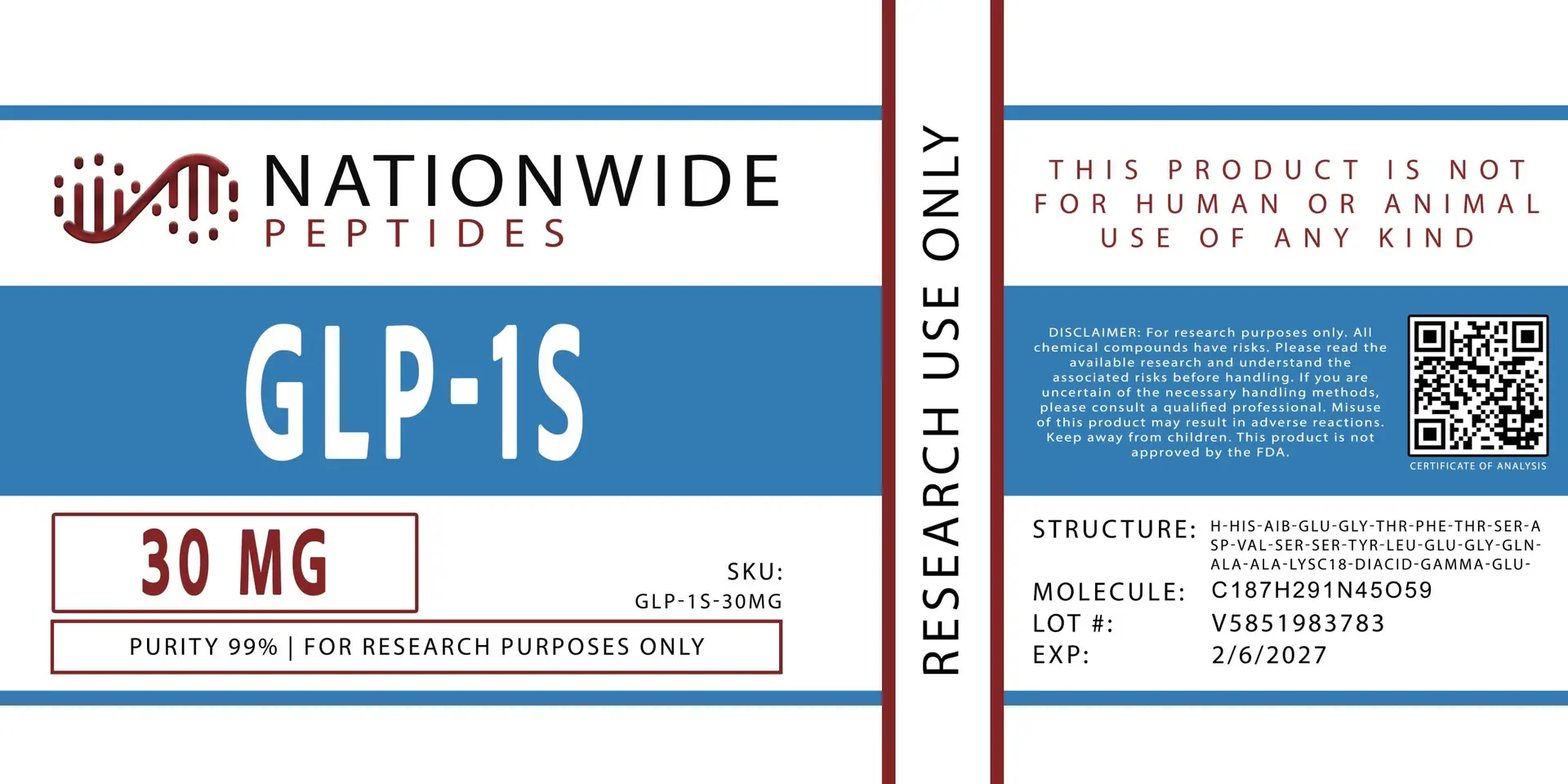

For Research Use Only. Not for human use.
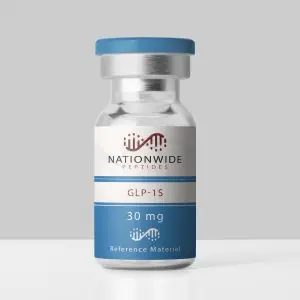
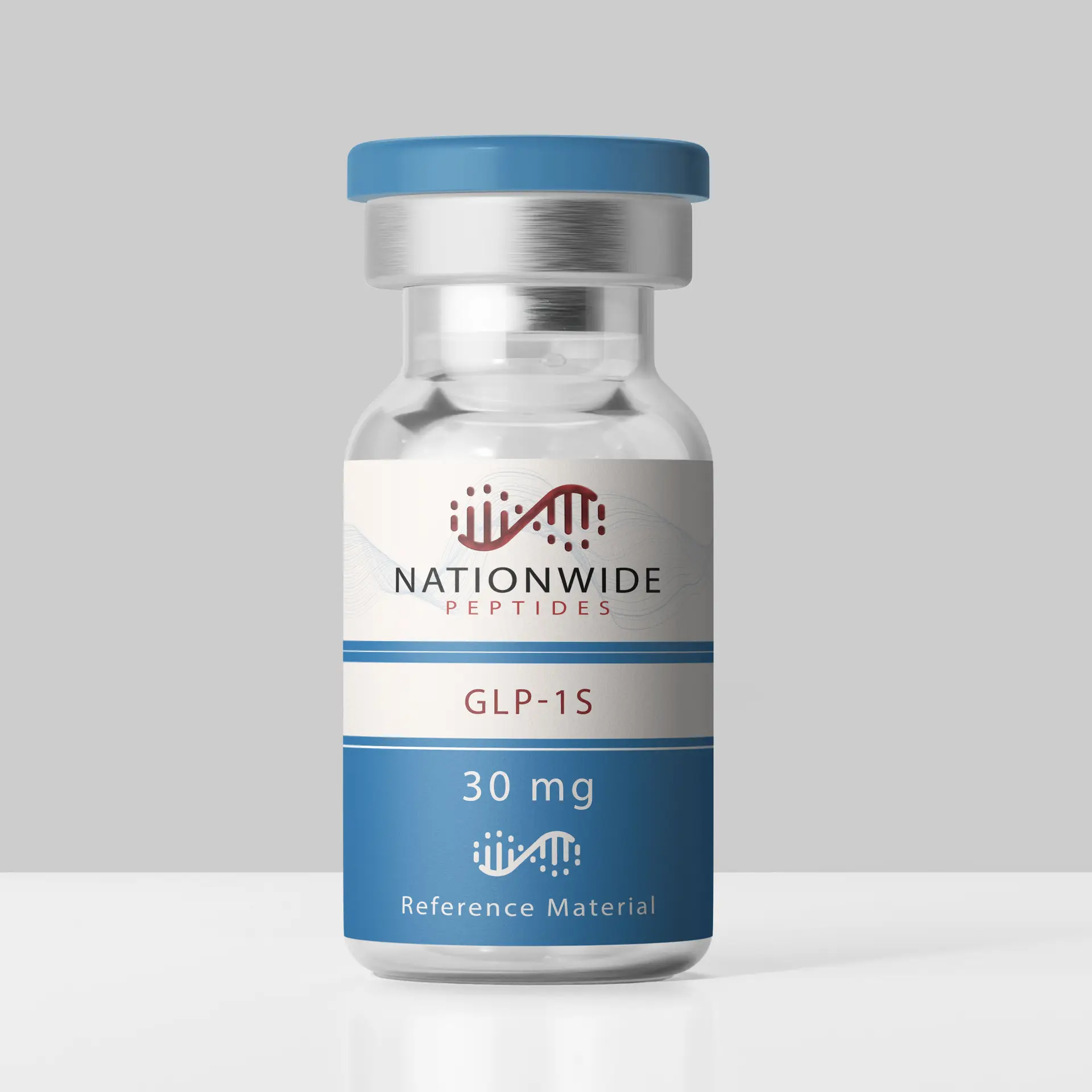
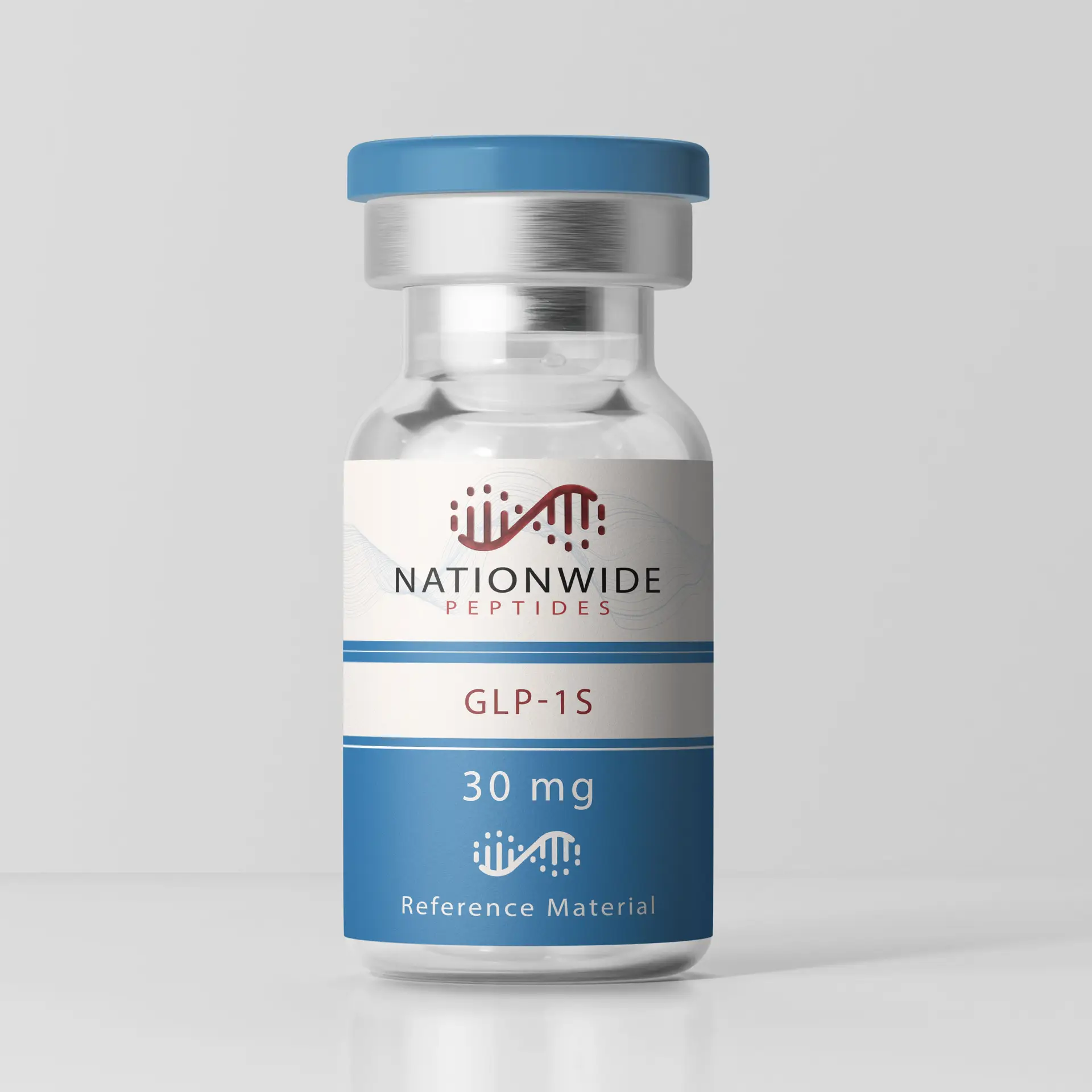
GLP-1S is a synthetic receptor agonist widely used in preclinical research to investigate glucose-dependent insulin secretion, modulation of gastric emptying, regulation of appetite pathways, and beta-cell function in metabolic models. This research-grade peptide is manufactured under rigorous GMP-compliant conditions and supplied as a lyophilized powder to maintain exceptional purity, stability, and consistency across experimental protocols.
Engineered exclusively for preclinical studies, each batch of GLP-1S undergoes rigorous quality verification and is accompanied by full documentation, including a Certificate of Analysis (COA), purity metrics, and structural confirmation data.
Key Scientific Applications
GLP-1S is a long-acting GLP-1 receptor agonist designed to mimic endogenous glucagon-like peptide-1 signaling. Preclinical and research investigations have utilized GLP-1S to explore the following research domains:
- Metabolic hormone regulation and satiety pathway signaling
- Insulin secretion response and glucose homeostasis mechanisms
- Gastrointestinal peptide signaling pathways
- Neuroendocrine control of appetite and energy intake models
- Cardiometabolic biomarker modulation in controlled laboratory settings
Why Researchers Choose Our GLP-1S
For laboratories seeking a reliable GLP-1 research peptide, our production process emphasizes consistency and scientific accuracy. Every batch is verified for:
- Purity & identity confirmation
- Reproducible results in research environments
- Controlled manufacturing and documentation
- Competitive research-market pricing
Research-Referenced Functional Attributes
(Based on existing preclinical literature — not intended as claims of therapeutic use. For research use only.)
- Modulation of appetite-regulating pathways via GLP-1 receptor activation in preclinical models
- Investigation of feeding behavior and caloric intake mechanisms in controlled research settings
- Support for studies involving glucose metabolism and insulin dynamics
- Evaluation of metabolic regulatory mechanisms in controlled laboratory environments
- Potential relevance in cardiometabolic research, including inflammatory and lipid pathway analysis
- Investigation of prolonged hormone-mimetic kinetics due to its extended half-life profile