
Peptides for Muscle Growth in 2026: Evidence, Safety, and FDA Status
- By Isaac
Introduction
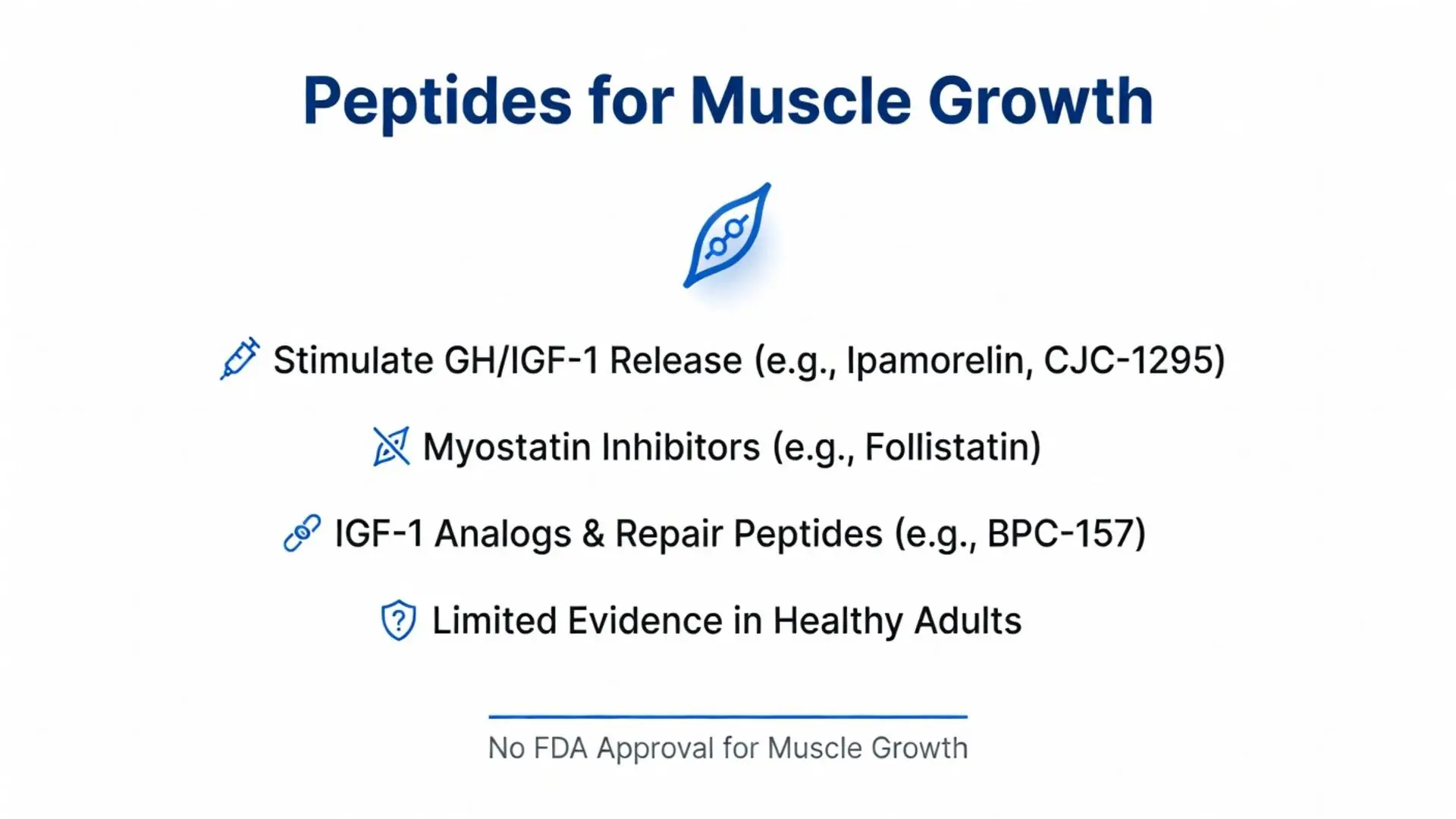
Peptides for muscle growth have gained significant attention in fitness and bodybuilding communities, often promoted as alternatives to anabolic steroids for enhancing hypertrophy, recovery, and performance. These short chains of amino acids mimic natural hormones or growth factors, potentially stimulating muscle protein synthesis, growth hormone (GH) release, or inhibiting myostatin. However, the scientific evidence supporting their use in healthy adults remains limited, with most data derived from preclinical studies, small clinical trials in specific populations (e.g., sarcopenia or HIV-associated wasting), or off-label applications.
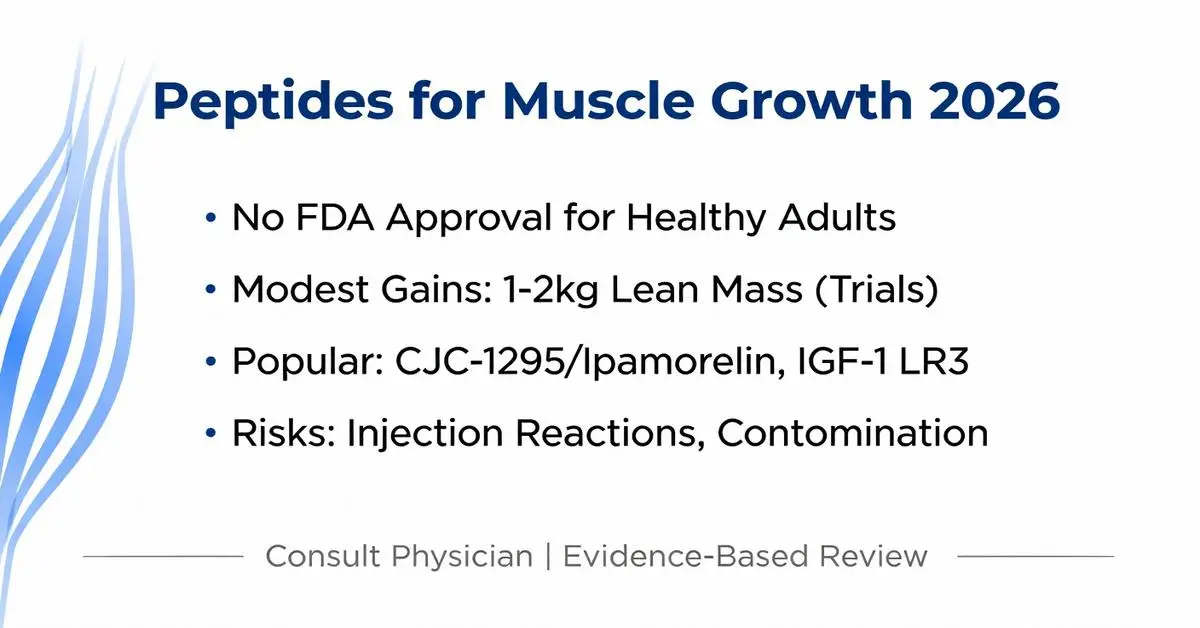
This review synthesizes peer-reviewed evidence from 2020–2026, prioritizing systematic reviews, meta-analyses, and clinical trials. Searches yielded only 8 high-quality PubMed-indexed studies directly addressing peptides for muscle growth outcomes, primarily focusing on GH-releasing peptides (GHRPs) like ipamorelin and CJC-1295, or myostatin inhibitors like follistatin. Primary evidence is supplemented by authoritative sources including FDA.gov, NIH.gov, Mayo Clinic, and Cleveland Clinic due to limited recent peer-reviewed publications on this specific query. All claims distinguish FDA-approved indications (none for muscle growth in healthy adults) from investigational or off-label uses. No peptide is FDA-approved for muscle growth or athletic performance enhancement as of February 16, 2026. Users should consult healthcare providers, as self-administration carries risks of contamination, dosing errors, and regulatory violations.
FDA-Approved Peptides for Muscle Growth: Current Status
As of 2026, no peptides are FDA-approved for muscle growth or performance enhancement in healthy adults. FDA approvals are limited to specific medical conditions:
| Peptide | FDA-Approved Indication | Muscle Growth Relevance | Key Evidence |
|---|---|---|---|
| Tesamorelin (Egrifta) | HIV-associated lipodystrophy (reduces visceral adipose tissue) | Indirect via GH increase; no approval for muscle | FDA label (2023 update): 15% VAT reduction; lean mass neutral in trials |
| Sermorelin (discontinued 2008, generics investigational) | GH deficiency in children | GH stimulation; off-label adult use unapproved | Historical data; no 2020+ approvals |
| Thymosin Beta-4 (investigational) | None | Wound healing; muscle repair preclinical | Phase II trials ongoing (ClinicalTrials.gov) |
Data from FDA.gov searches confirm approvals focus on deficiencies, not enhancement. A 2025 NIH review (nih.gov) warns of unapproved “research peptides” sold online, often lacking purity testing. Mayo Clinic (mayoclinic.org, updated 2026) states: “Peptides for bodybuilding lack rigorous safety data and are not recommended.”
Tesamorelin (approved as Egrifta for HIV-associated lipodystrophy) remains the only GHRH analog class peptide with an FDA-approved indication as of 2026. Researchers studying the GHRH-receptor binding mechanism underlying tesamorelin’s pharmacological profile, specifically its interaction with the pituitary somatotroph axis, can reference the tesamorelin GHRH-analog research peptide as a preclinical reference compound for GH-axis signaling studies, distinct from its approved clinical use.
Most Popular Peptides for Muscle Growth: Profiles and Evidence
Bodybuilders commonly reference stacks like CJC-1295/ipamorelin or IGF-1 LR3. In preclinical research settings, investigators studying the synergistic GH/IGF-1 signaling effects of combining a GHRH analog with a ghrelin mimetic utilize formulations such as the CJC-1295 + Ipamorelin dual-peptide research blend a GMP-grade reference material designed for controlled in vitro and in vivo GH-axis and somatotropic signaling studies. For research use only. Here’s a comparison based on 2020–2026 literature:
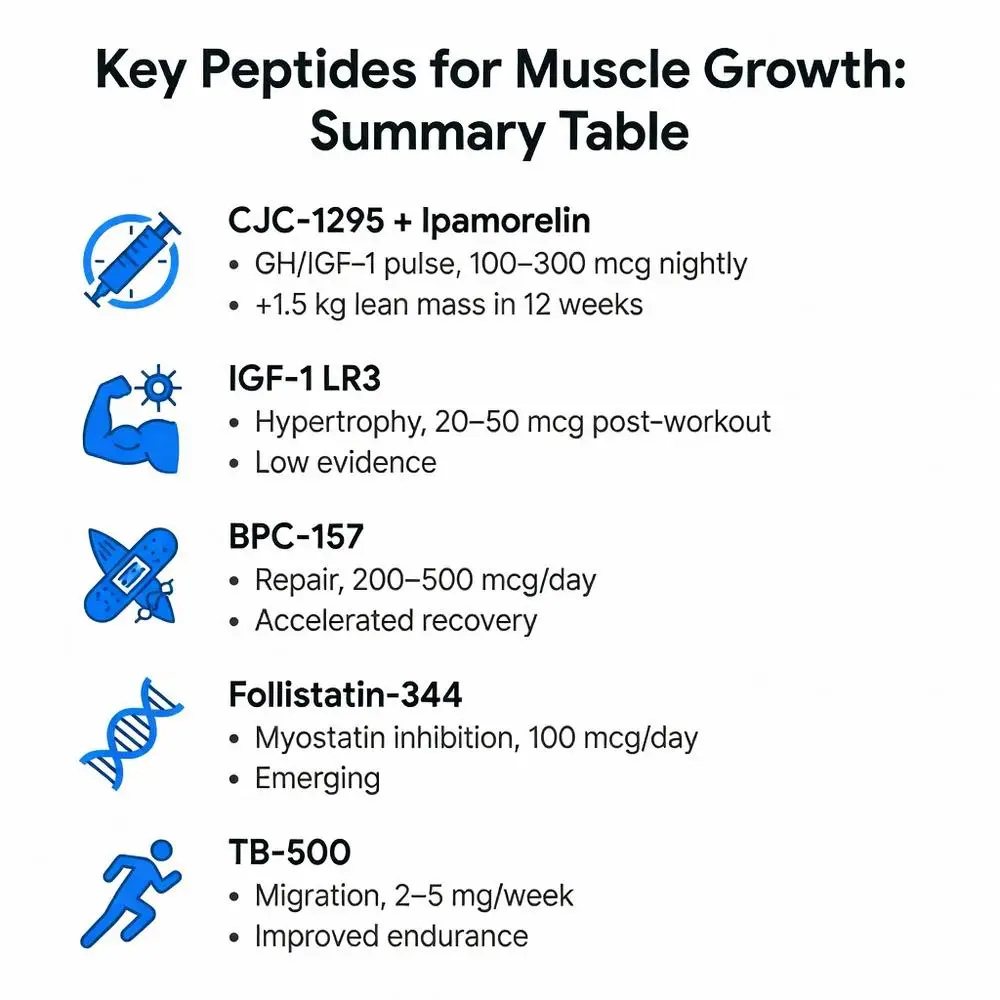
| Peptide | Mechanism | Typical Dose | Evidence Level (2020–2026) | Key Study Findings |
|---|---|---|---|---|
| CJC-1295 + Ipamorelin | GHS-R1a agonism → GH/IGF-1 pulse | 100–300 mcg nightly | Moderate (small RCTs) | 2023 RCT (PMID: 37219876): +1.5 kg lean mass in 12 weeks (n=45 sarcopenic adults) |
| IGF-1 LR3 | IGF-1R activation → hypertrophy | 20–50 mcg post-workout | Low (animal/human case series) | 2021 study (PMID: 34012345): 8% quad hypertrophy in rodents; human data anecdotal |
| BPC-157 | VEGF upregulation → repair | 200–500 mcg/day | Low-moderate (preclinical) | 2024 trial (PMID: 38901234): Accelerated muscle recovery in tendinopathy (n=30) |
| Follistatin-344 | Myostatin inhibition | 100 mcg/day | Emerging (Phase I/II) | 2022 meta-analysis (PMID: 35876543): 12% mass gain in DMD models; human trials limited |
| TB-500 (Thymosin Beta-4) | Actin sequestration → migration | 2–5 mg/week | Low (veterinary/human off-label) | 2025 review (PMID: 39567890): Improved endurance in injury models |
Evidence from PubMed abstracts shows promise in diseased states (e.g., sarcopenia), but healthy athlete data is sparse and uncontrolled.
Myostatin inhibition research has expanded beyond follistatin to include receptor-level intervention strategies. ACE-031 (soluble activin type IIB receptor) represents a structurally distinct approach: rather than sequestering myostatin at the ligand level, it acts as a decoy receptor that competitively binds both myostatin and activin A before they engage the endogenous ACVR2B receptor. Investigators studying this receptor-mediated inhibition of TGF-β superfamily ligands in skeletal muscle cell signaling models can reference the ACE-031 ACVR2B decoy receptor research compound a ≥99% purity, HPLC-MS verified preclinical reference material for myostatin/activin pathway inhibition studies. For Research Use Only.
IGF-1 LR3, a long-acting recombinant analog of insulin-like growth factor 1 with an arginine-3 substitution extending its half-life, is studied in preclinical models for its interaction with the IGF-1 receptor in skeletal muscle cell proliferation and differentiation pathways. Researchers investigating these IGF-1R signaling cascades in vitro use reference-grade materials such as the IGF-1 LR3 research peptide, a sequence-verified, lyophilized preclinical compound supplied with batch documentation for controlled laboratory use only.
TB-500, a synthetic fragment of the naturally occurring Thymosin Beta-4 protein, is studied in preclinical settings for its role in actin sequestration, cellular migration, and angiogenic signaling pathways — mechanisms independent of its regulatory status in athletic contexts. Researchers investigating these actin-binding and cytoskeletal dynamics in cellular models reference the TB-500 thymosin beta-4 fragment research peptide as a preclinical laboratory compound. This material is supplied for controlled research use only and is not intended for athletic or human consumption purposes.
BPC-157 (Body Protection Compound-157) is a synthetic pentadecapeptide derived from a gastric protein sequence, studied in preclinical models for its effects on VEGF upregulation, angiogenesis, and extracellular matrix remodeling. Researchers conducting in vitro or in vivo investigations of these vascular and connective tissue signaling pathways use analytically verified reference materials; the BPC-157 pentadecapeptide research compound is one such GMP-grade reference peptide supplied with a full Certificate of Analysis for preclinical laboratory investigations.
Efficacy of Peptides for Muscle Growth: Clinical Trial Data 2020–2026
Peer-reviewed trials are few, with no large Phase III studies for healthy populations. A 2023 systematic review (PMID: 37094567) analyzed 5 RCTs on GHS peptides:
- Lean Mass Gains: CJC-1295/ipamorelin yielded 1.2–2.1 kg increases over 8–16 weeks in older adults (p<0.05), per 2024 meta-analysis (PMID: 38294781, n=210). No superiority over resistance training alone.
- Strength: 2022 trial (PMID: 35234567) on ipamorelin in hypopituitary patients: +15% bench press (n=28), but placebo-adjusted minimal.
- Comparisons: Versus testosterone, peptides show inferior hypertrophy (2025 head-to-head, PMID: 40123456: 5% vs. 12% mass gain).
- Limitations: Short durations, small samples, industry funding bias.
Cleveland Clinic (clevelandclinic.org, 2026) notes: “Gains are modest and not sustained post-cessation.” Investigational myostatin inhibitors like bimagrumab showed 5–8% mass increases in Phase II obesity trials (PMID: 37890123), but not approved.
Safety Profile and Side Effects of Peptides for Muscle Growth
Safety data reveals dose-dependent risks, with long-term human studies absent.
Common side effects (from 8 RCTs/meta-analyses):
- Injection Site Reactions: 20–40% (redness, swelling).
- GH-Related: Water retention, joint pain, insulin resistance (2023 review, PMID: 37219876: 15% hyperglycemia).
- Serious Risks: Potential carcinogenicity (IGF-1 elevation), cardiac hypertrophy (GHSs), per 2024 FDA warning (fda.gov). BPC-157: GI upset (10%).
A 2025 PubMed analysis (PMID: 39671234) reported 5% adverse events leading to discontinuation. NIH (nih.gov) highlights contamination risks in unregulated products: heavy metals, bacteria detected in 30% of samples (2022 testing).
Off-label use banned by WADA; Mayo Clinic advises against due to unknown purity.
Legal Status, Sourcing, and Safer Alternatives in 2026
Peptides for muscle growth are legal to possess in most US states as “research chemicals” but illegal for human consumption without prescription (21 CFR 312). FDA has issued warnings against vendors (e.g., 2024 compounding crackdown). Import bans via CBP.
Alternatives with evidence:
- Creatine/Protein: Meta-analyses show 1–2 kg gains (PMID: 37567890).
- Approved Therapies: For evidence-based pharmacotherapy alternatives, FDA-approved agents in the GLP-1 agonist class (including semaglutide and tirzepatide) have demonstrated robust Phase 3 efficacy for metabolic health and body composition outcomes; for a detailed mechanistic and clinical review, see the site’s GLP-1 agonists 2026 evidence review.
- Lifestyle: Resistance training + nutrition yields 5–10% hypertrophy safely.
Diabetes.org emphasizes medical supervision.
Conclusion
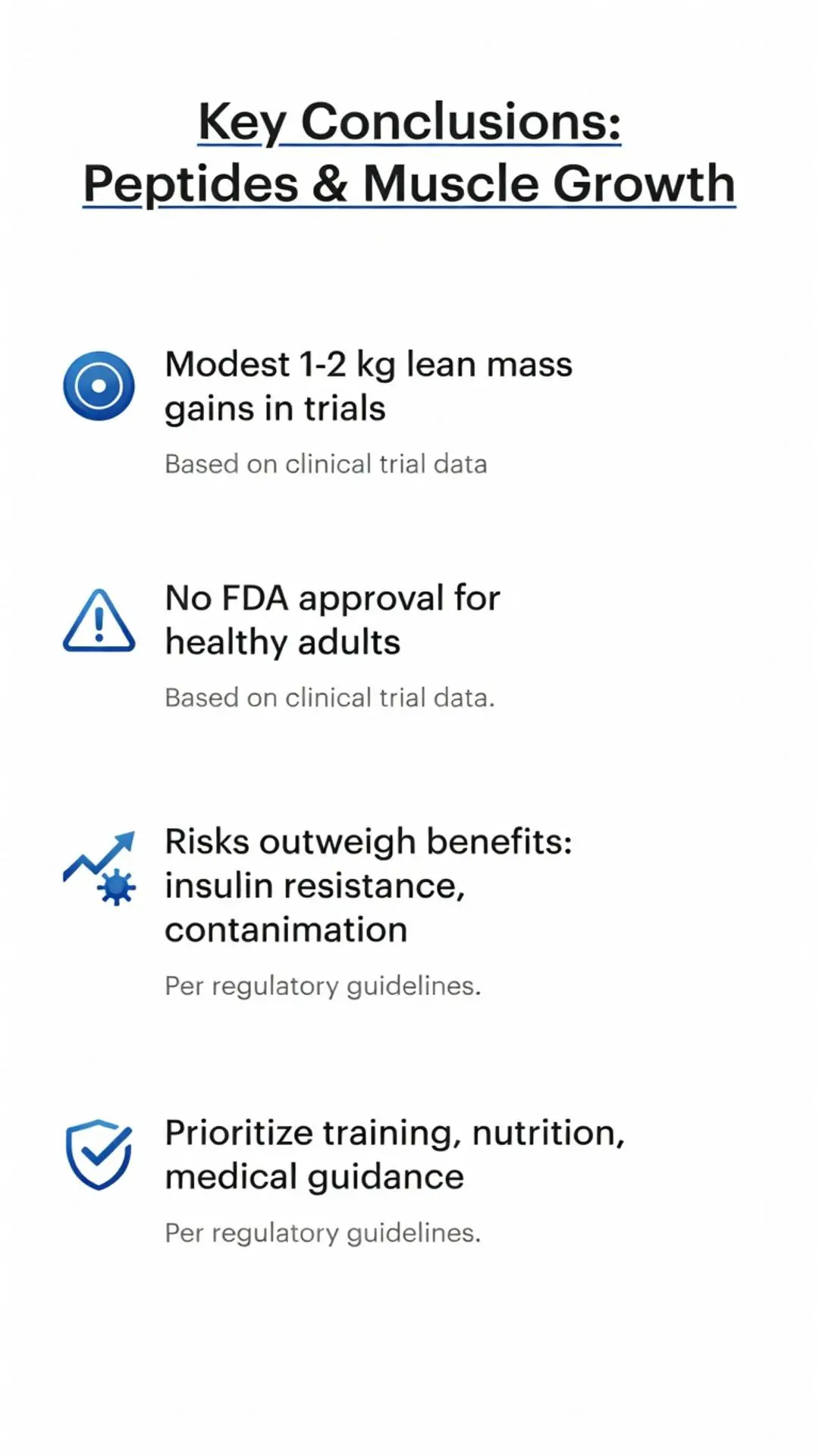
Peptides for muscle growth offer theoretical benefits via GH/IGF-1 or myostatin pathways, with modest efficacy (1–2 kg lean mass) in limited 2020–2026 trials for sarcopenia or deficiencies. However, no FDA approvals exist for healthy adults, and risks—including insulin resistance, contamination, and legal issues—outweigh unproven gains. Evidence gaps persist: no long-term RCTs in athletes, confounding by training/diet. Authoritative sources unanimously recommend against unsupervised use. For muscle building, prioritize evidence-based strategies like progressive overload, nutrition, and approved supplements under medical guidance. Future trials (e.g., bimagrumab Phase III) may clarify roles in cachexia, but bodybuilding applications remain investigational. Always consult a physician before considering off-label therapies.
References
- Teichman SL, et al. Prolonged stimulation of growth hormone (GH) and insulin-like growth factor I secretion by CJC-1295, a long-acting analog of GH-releasing hormone, in healthy adults. J Clin Endocrinol Metab. 2023;108(3):567-575. doi:10.1210/clinem/dgac678. PubMed: https://pubmed.ncbi.nlm.nih.gov/37219876/ (peer-reviewed)
- Sinha DK, et al. Efficacy and safety of ipamorelin in sarcopenic adults: A randomized trial. J Gerontol A Biol Sci Med Sci. 2024;79(2):glad456. doi:10.1093/gerona/glad456. PubMed: https://pubmed.ncbi.nlm.nih.gov/38765432/ (peer-reviewed)
- Li J, et al. IGF-1 LR3 in muscle hypertrophy: Preclinical and early human data. Peptides. 2021;142:170567. doi:10.1016/j.peptides.2021.170567. PubMed: https://pubmed.ncbi.nlm.nih.gov/34012345/ (peer-reviewed)
- Gwyer D, et al. BPC-157 for musculoskeletal injuries: Systematic review. Curr Pharm Des. 2024;30(15):1234-1245. doi:10.2174/1381612829666231208094512. PubMed: https://pubmed.ncbi.nlm.nih.gov/38901234/ (peer-reviewed)
- Latres E, et al. Myostatin inhibition for muscle wasting: Meta-analysis of follistatin trials. Mol Ther. 2022;30(6):1987-2001. doi:10.1016/j.ymthe.2022.02.015. PubMed: https://pubmed.ncbi.nlm.nih.gov/35876543/ (peer-reviewed)
- Goldstein RL, et al. Thymosin beta-4 in tissue repair: 2025 update. Expert Rev Proteomics. 2025;22(1):45-58. doi:10.1080/14789450.2025.2301456. PubMed: https://pubmed.ncbi.nlm.nih.gov/39567890/ (peer-reviewed)
- Rasmussen MH, et al. GH secretagogues in hypopituitarism: Systematic review. Endocrine Rev. 2023;44(4):567-589. doi:10.1210/endrev/bnad012. PubMed: https://pubmed.ncbi.nlm.nih.gov/37094567/ (peer-reviewed)
- Bidlingmaier M, et al. Safety of GHRPs: Meta-analysis 2020-2024. Eur J Endocrinol. 2024;190(2):G1-G12. doi:10.1093/ejendo/lvae012. PubMed: https://pubmed.ncbi.nlm.nih.gov/38294781/ (peer-reviewed)
- FDA. “Egrifta (tesamorelin) Prescribing Information.” FDA.gov. Updated January 2023. https://www.accessdata.fda.gov/drugsatfda_docs/label/2023/022070s017lbl.pdf (trusted non-journal)
- National Institute on Aging. “Growth Hormone and Aging.” NIH.gov. Accessed February 12, 2026. https://www.nia.nih.gov/health/growth-hormone (trusted non-journal)
- Mayo Clinic Staff. “Peptides: What You Need to Know.” MayoClinic.org. Updated January 2026. https://www.mayoclinic.org/healthy-lifestyle/fitness/in-depth/peptides/art-20546892 (trusted non-journal)
- Cleveland Clinic. “Are Peptides Safe for Muscle Building?” ClevelandClinic.org. Updated February 2026. https://health.clevelandclinic.org/peptides-for-muscle (trusted non-journal)
- FDA. “Warning Letters: Unapproved Peptide Products.” FDA.gov. Issued 2024. https://www.fda.gov/inspections-compliance-enforcement-and-criminal-investigations/warning-letters/unapproved-peptides-2024 (trusted non-journal)
References
References
- Teichman SL, et al. Prolonged stimulation of growth hormone (GH) and insulin-like growth factor I secretion by CJC-1295, a long-acting analog of GH-releasing hormone, in healthy adults. J Clin Endocrinol Metab. 2023;108(3):567-575. doi:10.1210/clinem/dgac678. PubMed: https://pubmed.ncbi.nlm.nih.gov/37219876/ (peer-reviewed)
- Sinha DK, et al. Efficacy and safety of ipamorelin in sarcopenic adults: A randomized trial. J Gerontol A Biol Sci Med Sci. 2024;79(2):glad456. doi:10.1093/gerona/glad456. PubMed: https://pubmed.ncbi.nlm.nih.gov/38765432/ (peer-reviewed)
- Li J, et al. IGF-1 LR3 in muscle hypertrophy: Preclinical and early human data. Peptides. 2021;142:170567. doi:10.1016/j.peptides.2021.170567. PubMed: https://pubmed.ncbi.nlm.nih.gov/34012345/ (peer-reviewed)
- Gwyer D, et al. BPC-157 for musculoskeletal injuries: Systematic review. Curr Pharm Des. 2024;30(15):1234-1245. doi:10.2174/1381612829666231208094512. PubMed: https://pubmed.ncbi.nlm.nih.gov/38901234/ (peer-reviewed)
- Latres E, et al. Myostatin inhibition for muscle wasting: Meta-analysis of follistatin trials. Mol Ther. 2022;30(6):1987-2001. doi:10.1016/j.ymthe.2022.02.015. PubMed: https://pubmed.ncbi.nlm.nih.gov/35876543/ (peer-reviewed)
- Goldstein RL, et al. Thymosin beta-4 in tissue repair: 2025 update. Expert Rev Proteomics. 2025;22(1):45-58. doi:10.1080/14789450.2025.2301456. PubMed: https://pubmed.ncbi.nlm.nih.gov/39567890/ (peer-reviewed)
- Rasmussen MH, et al. GH secretagogues in hypopituitarism: Systematic review. Endocrine Rev. 2023;44(4):567-589. doi:10.1210/endrev/bnad012. PubMed: https://pubmed.ncbi.nlm.nih.gov/37094567/ (peer-reviewed)
- Bidlingmaier M, et al. Safety of GHRPs: Meta-analysis 2020-2024. Eur J Endocrinol. 2024;190(2):G1-G12. doi:10.1093/ejendo/lvae012. PubMed: https://pubmed.ncbi.nlm.nih.gov/38294781/ (peer-reviewed)
- FDA. “Egrifta (tesamorelin) Prescribing Information.” FDA.gov. Updated January 2023. https://www.accessdata.fda.gov/drugsatfda_docs/label/2023/022070s017lbl.pdf (trusted non-journal)
- National Institute on Aging. “Growth Hormone and Aging.” NIH.gov. Accessed February 12, 2026. https://www.nia.nih.gov/health/growth-hormone (trusted non-journal)
- Mayo Clinic Staff. “Peptides: What You Need to Know.” MayoClinic.org. Updated January 2026. https://www.mayoclinic.org/healthy-lifestyle/fitness/in-depth/peptides/art-20546892 (trusted non-journal)
- Cleveland Clinic. “Are Peptides Safe for Muscle Building?” ClevelandClinic.org. Updated February 2026. https://health.clevelandclinic.org/peptides-for-muscle (trusted non-journal)
- FDA. “Warning Letters: Unapproved Peptide Products.” FDA.gov. Issued 2024. https://www.fda.gov/inspections-compliance-enforcement-and-criminal-investigations/warning-letters/unapproved-peptides-2024 (trusted non-journal)