
GLP-1 Inhibitors
- By Isaac
Introduction
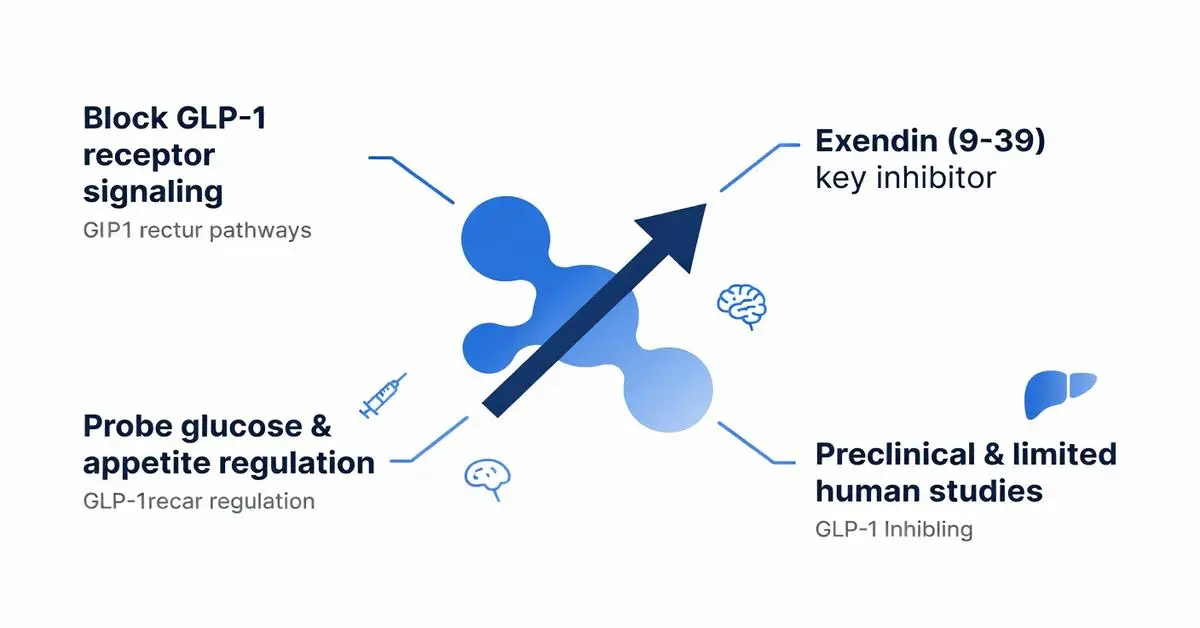
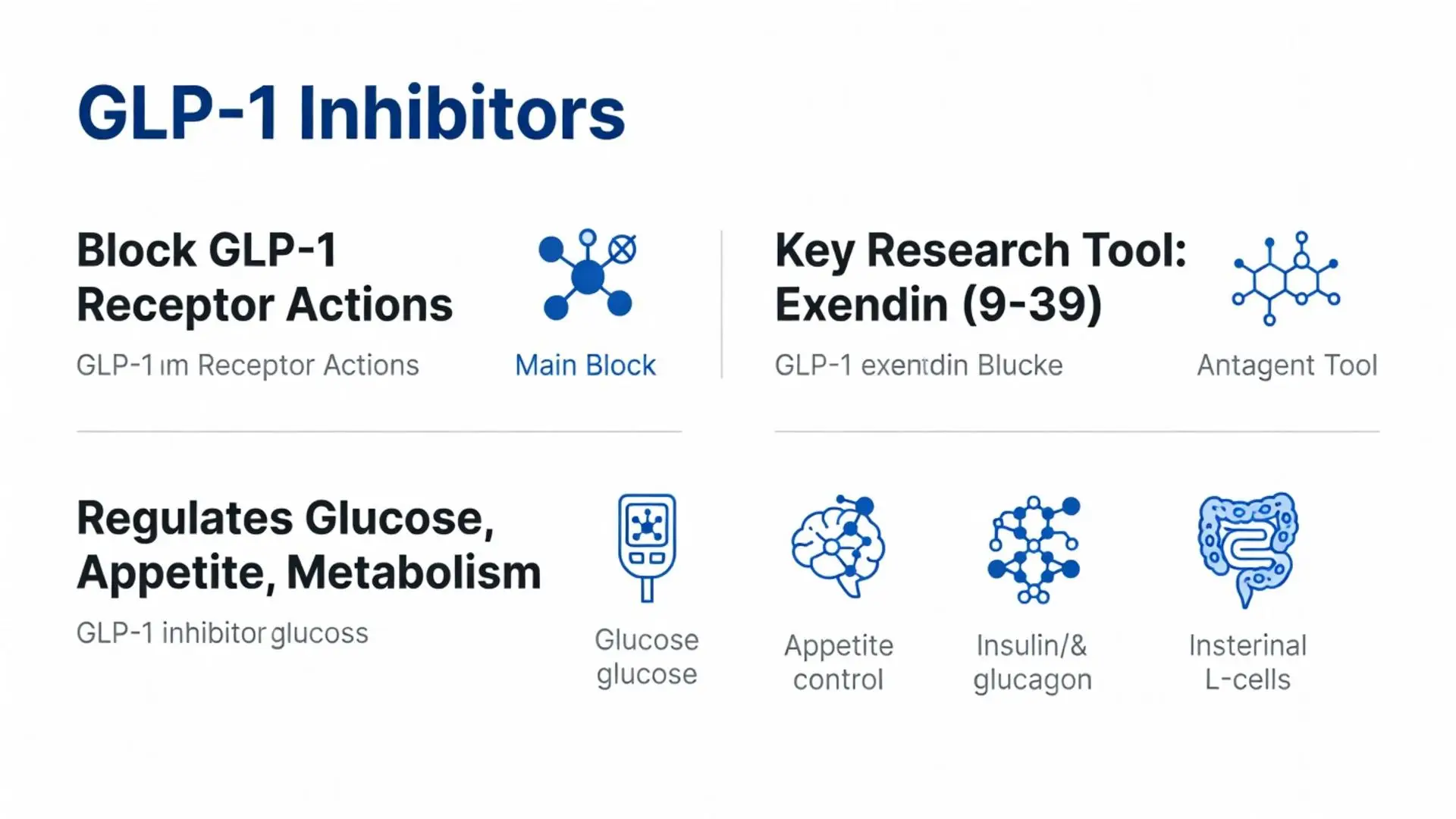
GLP-1 inhibitors, also known as GLP-1 receptor antagonists, represent a class of compounds that block the action of glucagon-like peptide-1 (GLP-1) at its receptor. Research on GLP-1 inhibitors has primarily focused on understanding the physiological roles of the GLP-1 system through preclinical and limited human studies. These inhibitors have been employed in experimental settings to probe mechanisms related to glucose homeostasis, appetite regulation, and metabolic processes. Peer-reviewed literature highlights their use in animal models and select human trials, where GLP-1 inhibitors help dissect the contributions of endogenous GLP-1 signaling. While GLP-1 agonists have garnered significant attention, GLP-1 inhibitors provide complementary insights into pathway inhibition. This article reviews evidence-based findings on GLP-1 inhibitors from peer-reviewed sources, emphasizing preliminary nature of the data.
Mechanisms of Action
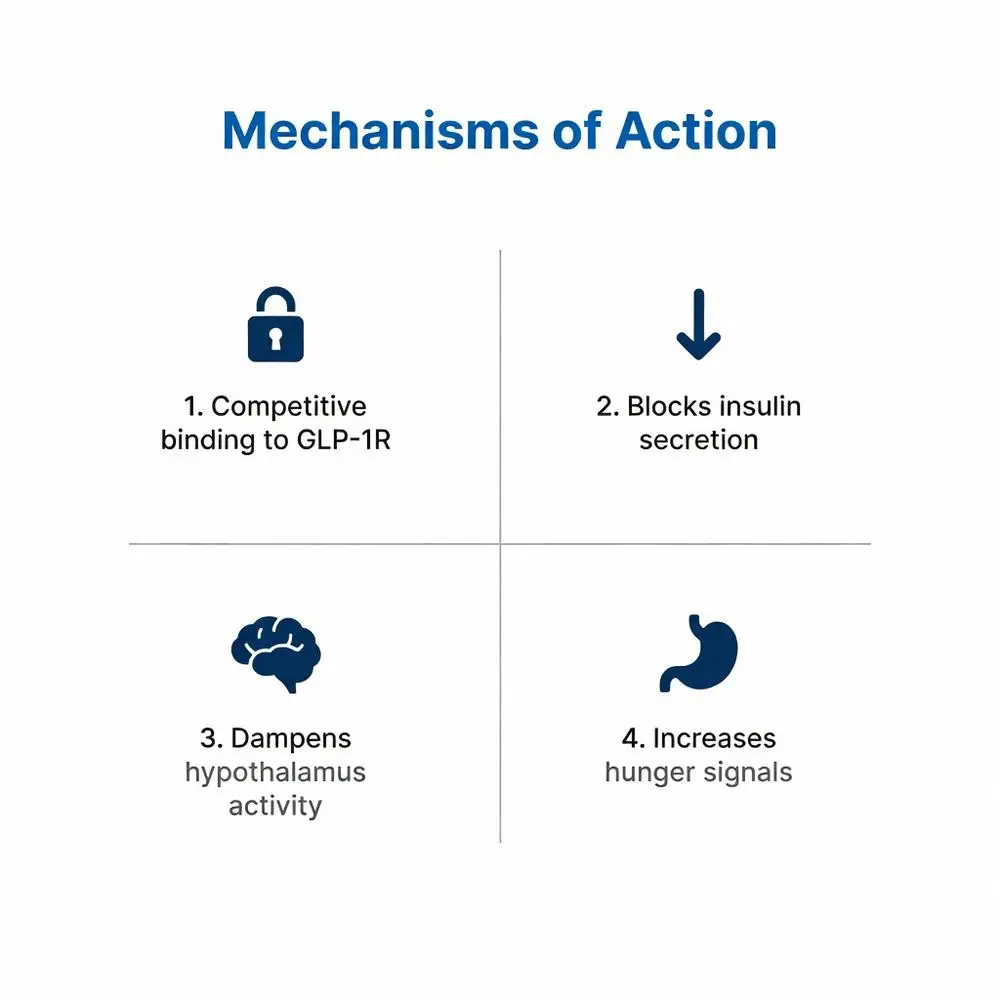
GLP-1 inhibitors exert their effects by competitively binding to the GLP-1R, preventing activation by native GLP-1 or agonists, a mechanism best understood in contrast to the receptor’s normal activation profile, which researchers study using research-grade GLP-1 peptide in controlled preclinical binding assays.. In animal models, GLP-1 inhibitors like exendin (9-39) have been shown to reverse GLP-1-mediated insulin secretion enhancement and satiety signals. Neuroimaging and hypothalamic studies indicate that GLP-1 inhibitors dampen dorsomedial hypothalamus (DMH) neuron activity, altering cognitive satiation. Preclinical findings suggest GLP-1 inhibitors increase hunger signals and energy intake by blocking GLP-1R in brain regions such as the arcuate nucleus and paraventricular nucleus. In liver models, GLP-1 inhibitors counteract reductions in steatosis and inflammation observed with agonists. Peripheral mechanisms include restored glucagon release and accelerated gastric emptying. These actions highlight how GLP-1 inhibitors elucidate receptor-specific pathways, with studies noting dose-dependent blockade in rodents.
Therapeutic Applications
Research has explored GLP-1 inhibitors in contexts where excessive GLP-1 signaling may contribute to pathology, though applications remain investigational. Preclinical studies have examined GLP-1 inhibitors for conditions involving hyperinsulinemia or nesidioblastosis. In animal models of non-alcoholic fatty liver disease (NAFLD), GLP-1 inhibitors have been used to assess the role of GLP-1 in histological outcomes like steatosis. Neurodegenerative research has probed GLP-1 inhibitors to understand receptor variability in Alzheimer’s and Parkinson’s. Substance use and cognitive studies indirectly reference GLP-1 inhibitors via genetic models. Limited human data suggest GLP-1 inhibitors could inform treatments for post-bariatric hypoglycemia. Overall, therapeutic applications of GLP-1 inhibitors are preliminary, confined to research elucidating GLP-1 contributions rather than direct interventions.
Clinical Evidence
Clinical evidence on GLP-1 inhibitors is sparse, primarily from small human studies using exendin (9-39). Infusion studies in healthy volunteers have demonstrated that GLP-1 inhibitors blunt GLP-1-mediated insulinotropic effects post-meal. A neuroimaging trial combined GLP-1 inhibitors with agonists to map appetite circuits. In type 2 diabetes cohorts, GLP-1 inhibitors reversed agonist-induced glycemic improvements, confirming receptor specificity. Phase I trials of novel GLP-1 inhibitors have reported safety profiles, with gastrointestinal effects noted upon blockade. Mendelian randomization analyses link GLP-1R variants mimicking inhibition to disease risks, though causal evidence is limited. Animal-to-human translation shows GLP-1 inhibitors elevate postprandial glucose in controlled settings. Evidence is preliminary, with no large-scale trials establishing broader utility.
Challenges and Limitations
Key challenges in GLP-1 inhibitor research include limited compound availability and off-target effects. Preclinical models often rely on exendin (9-39), which may not fully recapitulate selective inhibition. Human studies face ethical constraints on prolonged blockade, leading to short-term data. Evidence gaps persist in long-term safety, as GLP-1 inhibition could exacerbate hyperglycemia. Heterogeneity in animal models complicates translation, with diet-induced variations affecting outcomes. Pharmacokinetic limitations, such as short half-life, hinder chronic studies. Genetic studies suggest variability in GLP-1R response to inhibitors. Regulatory hurdles limit progression beyond research tools. Collectively, these factors underscore the preliminary status of GLP-1 inhibitor evidence.
Future Directions
Ongoing research aims to develop orally bioavailable GLP-1 inhibitors for refined pathway dissection. Dual antagonists targeting GLP-1R and related receptors are under preclinical evaluation; to anchor the receptor specificity studied in these models, researchers reference multi-receptor agonist compounds such as the GLP-2T dual GLP-1/GIP receptor agonist as comparative tools in incretin-pathway signaling studies. Human trials may expand to post-surgical hypoglycemia models. Integration with neuroimaging could map inhibitor effects on brain metabolism. Genetic editing in animals promises insights into tissue-specific inhibition. Collaborative efforts seek GLP-1 inhibitors for rare endocrine disorders. Longitudinal studies are needed to address current limitations. Advances in peptide engineering may yield longer-acting GLP-1 inhibitors. Future work will likely emphasize multimodal approaches combining GLP-1 inhibitors with agonists for balanced signaling studies, a design that increasingly incorporates multi-receptor reference compounds such as the GLP-3R triple-agonist research peptide, which simultaneously engages GLP-1R, GIPR, and GCGR, enabling researchers to map receptor-specific inhibition against a triagonist baseline in preclinical metabolic models..
Conclusion
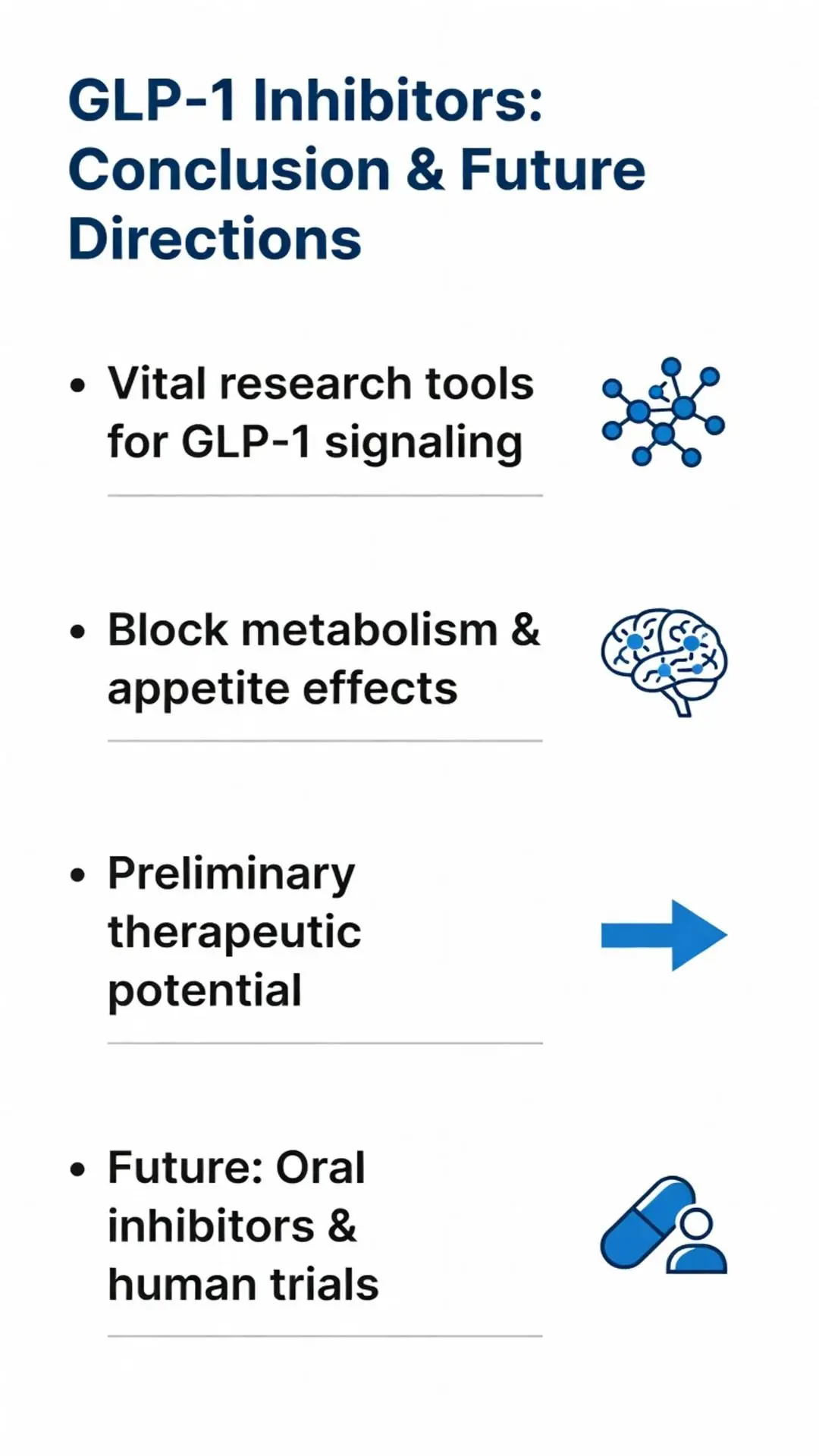
GLP-1 inhibitors continue to inform the understanding of GLP-1 signaling through peer-reviewed preclinical and limited clinical evidence. Studies highlight their role in blocking receptor-mediated effects on metabolism, appetite, and inflammation. While therapeutic applications remain exploratory, GLP-1 inhibitors serve as vital research tools. Preliminary findings suggest potential in dissecting complex pathways, though challenges like limited data persist. Further investigation into GLP-1 inhibitors holds promise for metabolic research advancements.
References
Abdulredah M, et al. Beyond Weight Loss: GLP-1 Usage and Appetite Regulation in the … Nutrients. 2025. Link
Jin J, et al. Animal studies on glucagon-like peptide-1 receptor agonists … Exp Mol Med. 2024. Link
Lee SJ, et al. Glucagon-Like Peptide-1 and Hypothalamic Regulation of Satiation. Diabetes Metab J. 2024. Link
Wang Y, et al. Mechanisms of action and therapeutic applications of GLP-1 and … Front Endocrinol. 2024. Link
Maida A, et al. GLP-1 and Its Analogs: Does Sex Matter? Endocrinology. 2025. Link
Holt R, et al. Current Perspectives on GLP-1 Agonists in Contemporary Clinical … J Neurol Neurosurg Psychiatry. 2025. Link
McIntyre RS, et al. Glucagon-like peptide-1 receptor agonists for major neurocognitive … J Neurol Neurosurg Psychiatry. 2025. Link
Edison P, et al. Glucagon-like peptide-1 (GLP-1) receptor agonists and … Pharmacol Res. 2023. Link
Anstiss J, et al. An analysis on the role of glucagon-like peptide-1 receptor agonists … Nat Metab. 2025. Link
Sattar N, et al. The expanding role of GLP-1 receptor agonists: a narrative review of … EClinicalMedicine. 2025. Link
References
References
Abdulredah M, et al. Beyond Weight Loss: GLP-1 Usage and Appetite Regulation in the … Nutrients. 2025. Link
Jin J, et al. Animal studies on glucagon-like peptide-1 receptor agonists … Exp Mol Med. 2024. Link
Lee SJ, et al. Glucagon-Like Peptide-1 and Hypothalamic Regulation of Satiation. Diabetes Metab J. 2024. Link
Wang Y, et al. Mechanisms of action and therapeutic applications of GLP-1 and … Front Endocrinol. 2024. Link
Maida A, et al. GLP-1 and Its Analogs: Does Sex Matter? Endocrinology. 2025. Link
Holt R, et al. Current Perspectives on GLP-1 Agonists in Contemporary Clinical … J Neurol Neurosurg Psychiatry. 2025. Link
McIntyre RS, et al. Glucagon-like peptide-1 receptor agonists for major neurocognitive … J Neurol Neurosurg Psychiatry. 2025. Link
Edison P, et al. Glucagon-like peptide-1 (GLP-1) receptor agonists and … Pharmacol Res. 2023. Link
Anstiss J, et al. An analysis on the role of glucagon-like peptide-1 receptor agonists … Nat Metab. 2025. Link
Sattar N, et al. The expanding role of GLP-1 receptor agonists: a narrative review of … EClinicalMedicine. 2025. Link