
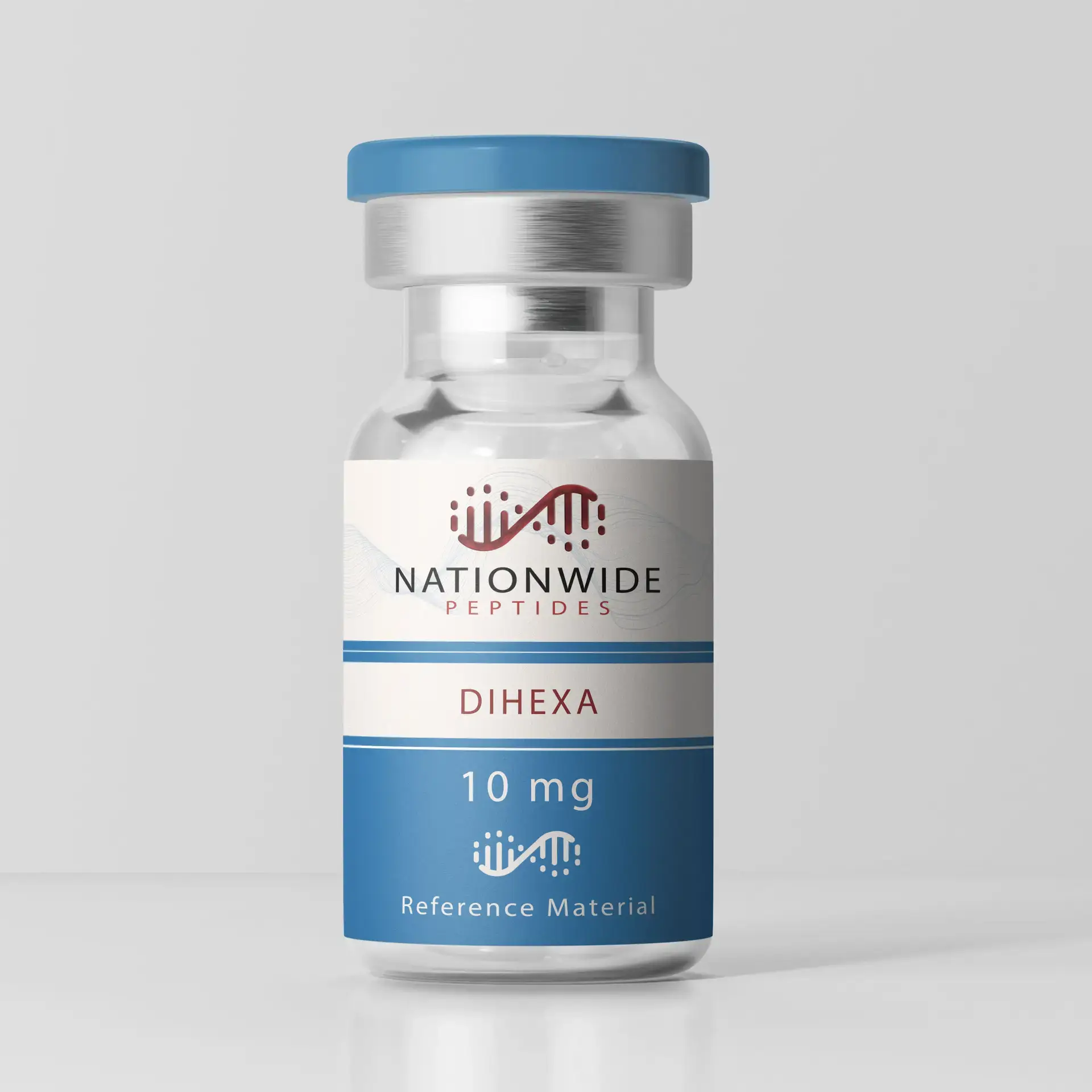
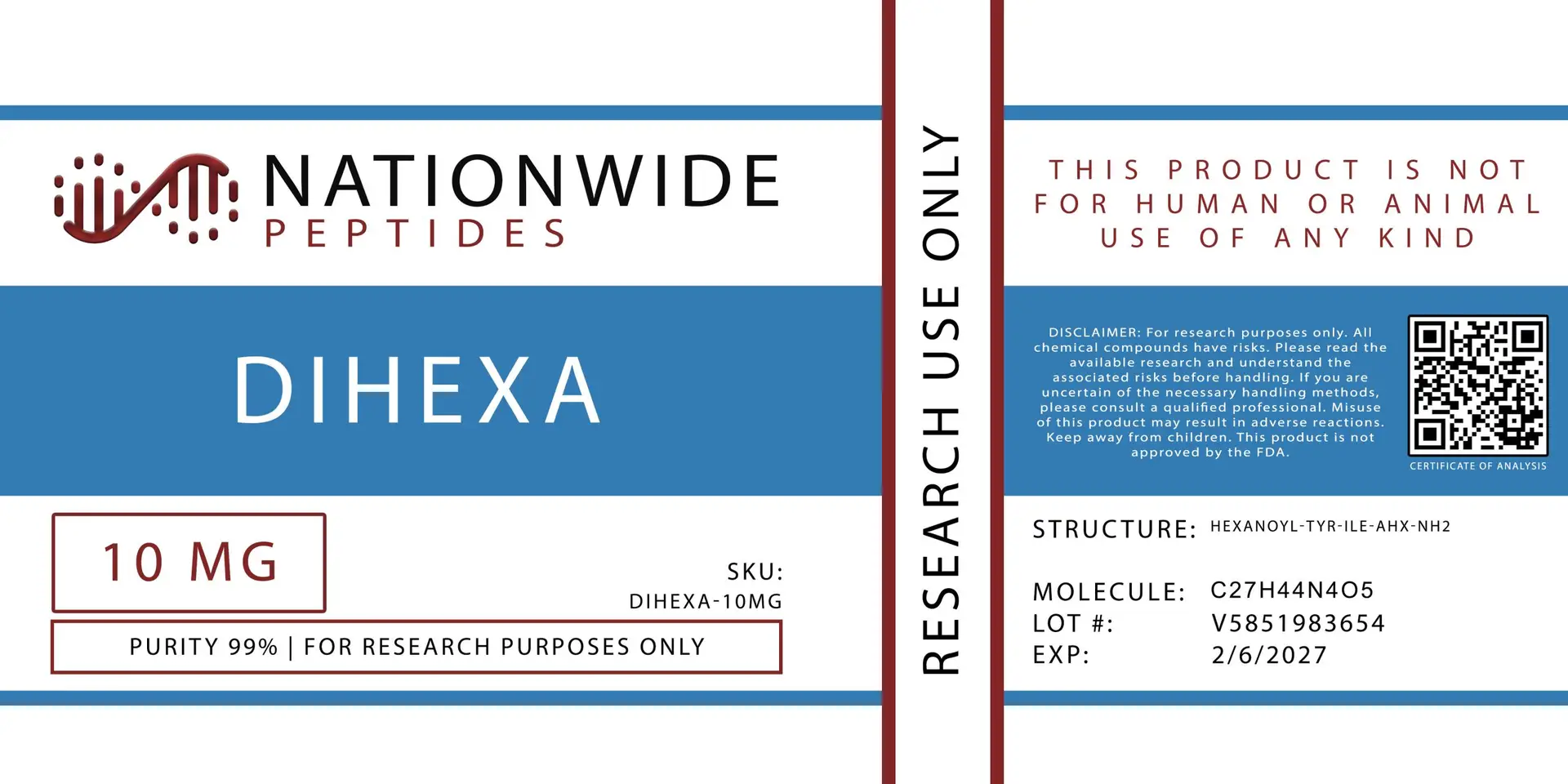

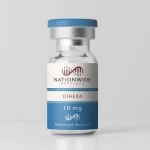



Dihexa is a metabolically stabilized synthetic peptide widely used in preclinical research to investigate allosteric potentiation of HGF activity, c-Met receptor activation, synaptogenesis, and neuroregenerative signaling. This research-grade peptide is produced under stringent GMP-compliant conditions and provided as a lyophilized powder to ensure superior purity, stability, and reliability in experimental applications.
Engineered solely for preclinical investigations, each batch of Dihexa undergoes a comprehensive quality assessment and includes complete documentation, including a Certificate of Analysis (COA), purity data, and structural verification.
Scientific Overview
Dihexa binds to hepatocyte growth factor (HGF) with high affinity and potentiates its activity at the c-Met receptor in research settings. Preclinical investigations have examined Dihexa in the following mechanistic areas:
- Potentiation of HGF-dependent c-Met phosphorylation and cellular scattering
- Induction of synaptogenesis and dendritic arborization in neuronal models
- Examination of signaling pathway activity in cognitive impairment paradigm models
- Investigation of neuroplasticity markers in experimental stress or aging paradigm models
- Study of neuronal survival pathway signaling in neurodegenerative research contexts
Why Researchers Choose Our Dihexa
For laboratories requiring dependable Dihexa research peptide, our manufacturing process prioritizes reproducibility and scientific precision. Every batch is confirmed for:
- Purity ≥99% by HPLC
- Structural identity via mass spectrometry
- Third-party Certificate of Analysis (COA) available per lot
For Research Use Only
Explore our testing protocols in About Peptides > Rigorous Testing.
Research-Referenced Functional Attributes (Based on existing preclinical and literature data—not intended as claims of therapeutic use)
- High-affinity binding to HGF and potentiation of c-Met activation in the presence of subthreshold HGF concentrations in cellular assays (DOI: 10.1124/jpet.114.218735)
- Induction of synaptogenesis and dendritic spine formation through HGF/c-Met pathway augmentation in neuronal models
- Observation of PI3K/AKT signaling modulation in APP/PS1 mouse models (DOI: 10.3389/fnagi.2021.748253)
- Investigation of neuroregenerative signaling mechanisms in scopolamine-induced impairment paradigms
- Examination of synaptic protein expression markers in aging or stress-challenged experimental systems
- Examination of oral bioavailability and blood-brain barrier penetration in rodent studies