Product Usage: This PRODUCT IS INTENDED AS A RESEARCH CHEMICAL ONLY. This designation allows the use of research chemicals strictly for in vitro testing and laboratory experimentation only. All product information available on this website is for educational purposes only. Bodily introduction of any kind into humans or animals is strictly forbidden by law. This product should only be handled by licensed, qualified professionals. This product is not a drug, food, or cosmetic and may not be misbranded, misused or mislabeled as a drug, food or cosmetic
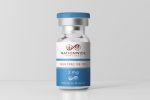
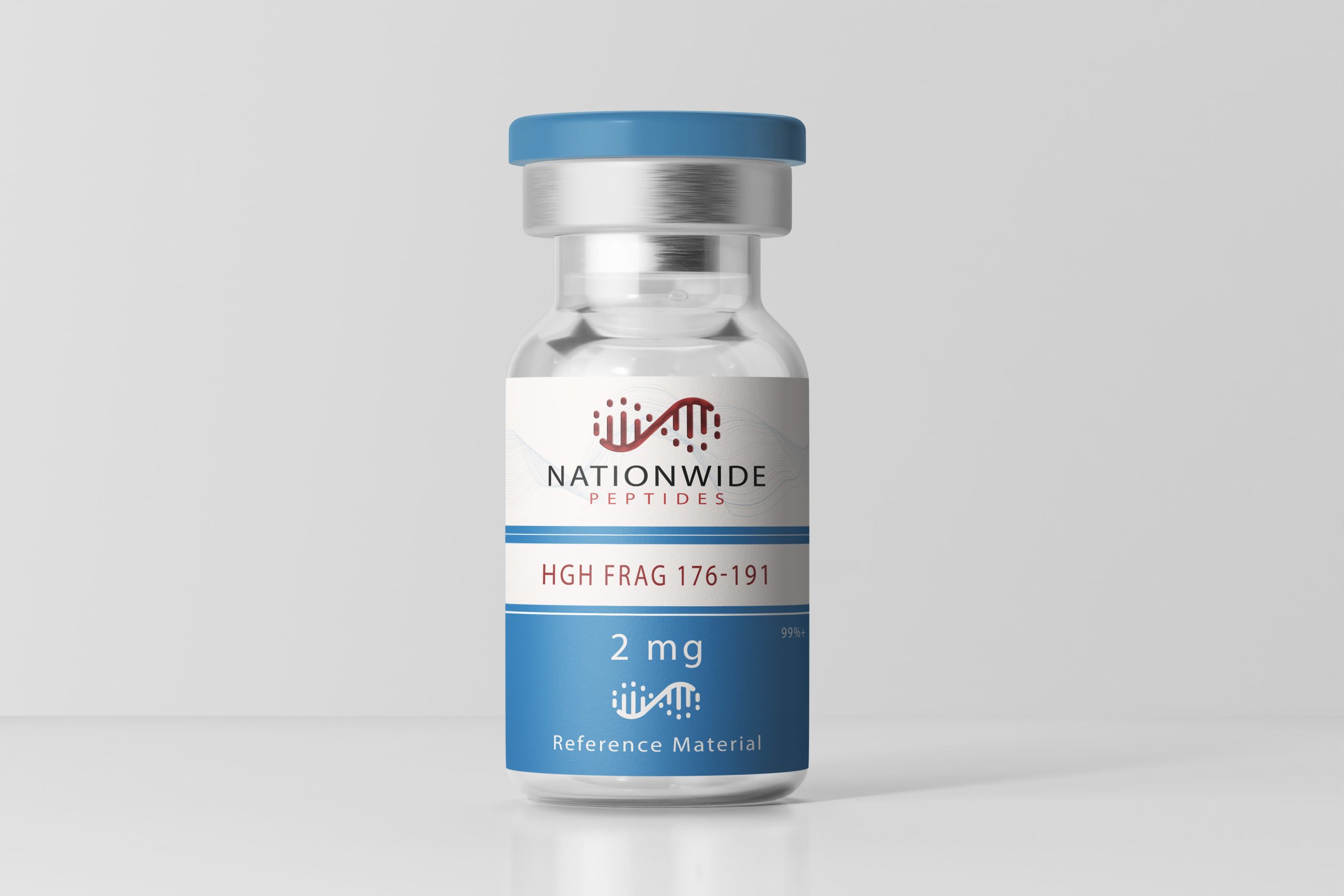
HGH Fragment 176-191
HGH Fragment 176-191
$63.00 – $72.00Price range: $63.00 through $72.00
Research-grade HGH Fragment 176-191, is a 16-amino-acid synthetic analog of the C-terminal region of human growth hormone (hGH), designed for controlled investigations of lipolysis, adipose tissue metabolism, beta-adrenergic receptor modulation, and potential anti-cancer targeting in cellular and animal models.
HGH Fragment 176-191 is a truncated peptide corresponding to amino acids 176-191 of the full-length human growth hormone (hGH) protein, first identified in the 1990s for its selective lipolytic properties independent of full hGH’s anabolic effects. This research-grade lyophilized formulation is synthesized under strict quality controls and provided with comprehensive analytical documentation, making it suitable for metabolic, oncology, and regenerative biology studies.
Key Scientific
- High-purity HGH Fragment 176-191 (≥ 98% by HPLC, acetate salt form)
- Verified 16-amino-acid sequence (Tyr-Leu-Arg-Ile-Val-Gln-Cys-Arg-Ser-Val-Glu-Gly-Ser-Cys-Gly-Phe)
- Lyophilized powder for optimal stability and solubility
- Full Certificate of Analysis (COA) with HPLC, MS, and amino acid analysis
- Manufactured in GMP-aligned, ISO-compliant facilities
- Ideal for lipolytic pathway, adipose metabolism, and receptor-binding research
Research-Referenced Applications (Based on scientific literature; not therapeutic claims)
- Selective stimulation of lipolysis and fat oxidation in adipose tissue models via beta-3 adrenergic receptor (ADRB3) agonism
- Potential modulation of glycogen synthase phosphatase and glucose metabolism in rodent muscle tissue
- Enhancement of drug delivery and cytotoxicity in cancer cell lines (e.g., MCF-7 breast cancer via receptor targeting)
- Investigation of thermogenesis, energy expenditure, and body weight regulation without IGF-1 elevation
- Exploration of mitochondrial uncoupling and AMPK phosphorylation for fatty acid oxidation
- Synergistic effects in blends with GHRH analogs for metabolic and hormonal signaling studies
Why Researchers Choose Nationwide Peptides HGH Fragment 176-191
- Precise C-terminal sequence mimicry (not full hGH or modified AOD9604)
- Consistent solubility and bioactivity batch-to-batch
- Transparent analytical data (HPLC, MS, purity >98%)
- Trusted by metabolic endocrinology, oncology, and peptide-biotechnology laboratories
- Competitive research pricing with bulk options
Storage & Handling
- Store lyophilized powder at –4 °F (long-term) or 39.2 °F (short-term)
- Store in a tightly sealed container and protect from light, moisture, air exposure, and elevated temperatures.
- Reconstitute only with sterile laboratory buffers (e.g., bacteriostatic water or acetic acid solutions)
- Reconstituted solutions stable at 39.2 °F for up to 4 weeks; avoid repeated freeze-thaw cycles
- Use appropriate PPE and aseptic techniques
Peptide Research
- PubMed/PMC: Habibullah et al. (2022) doxorubicin enhancement [PMID: 35783198]; Heffernan et al. (2001) lipolytic effects [PMID: 11713213]; Ng et al. (2000) metabolic studies [PMID: 10950816] – https://pubmed.ncbi.nlm.nih.gov/35783198/
- Reviews/Trials: Stier et al. (2013) AOD9604 safety [DOI: 10.14740/jocmr157w]; Moré et al. (2014) GRAS status [DOI: 10.14740/jofem213w]; Peptides.org (2025) reviews/safety – https://www.jofem.org/index.php/jofem/article/view/157/194
- PubMed: Habibullah et al. (2022) doxorubicin enhancement [PMID: 35783198, https://pubmed.ncbi.nlm.nih.gov/35783198/]; Ng et al. (2000) hyperglycemic effects [PMID: 10950816, https://pubmed.ncbi.nlm.nih.gov/10950816/]; Heffernan et al. (2001) lipid metabolism [PMID: 11713213 , https://pubmed.ncbi.nlm.nih.gov/11713213/].
- Short-term hyperglycemia or insulin shifts in rodents; avoid in diabetics or those with glucose issues—monitor closely in studies.
https://pubmed.ncbi.nlm.nih.gov/645904/
COA