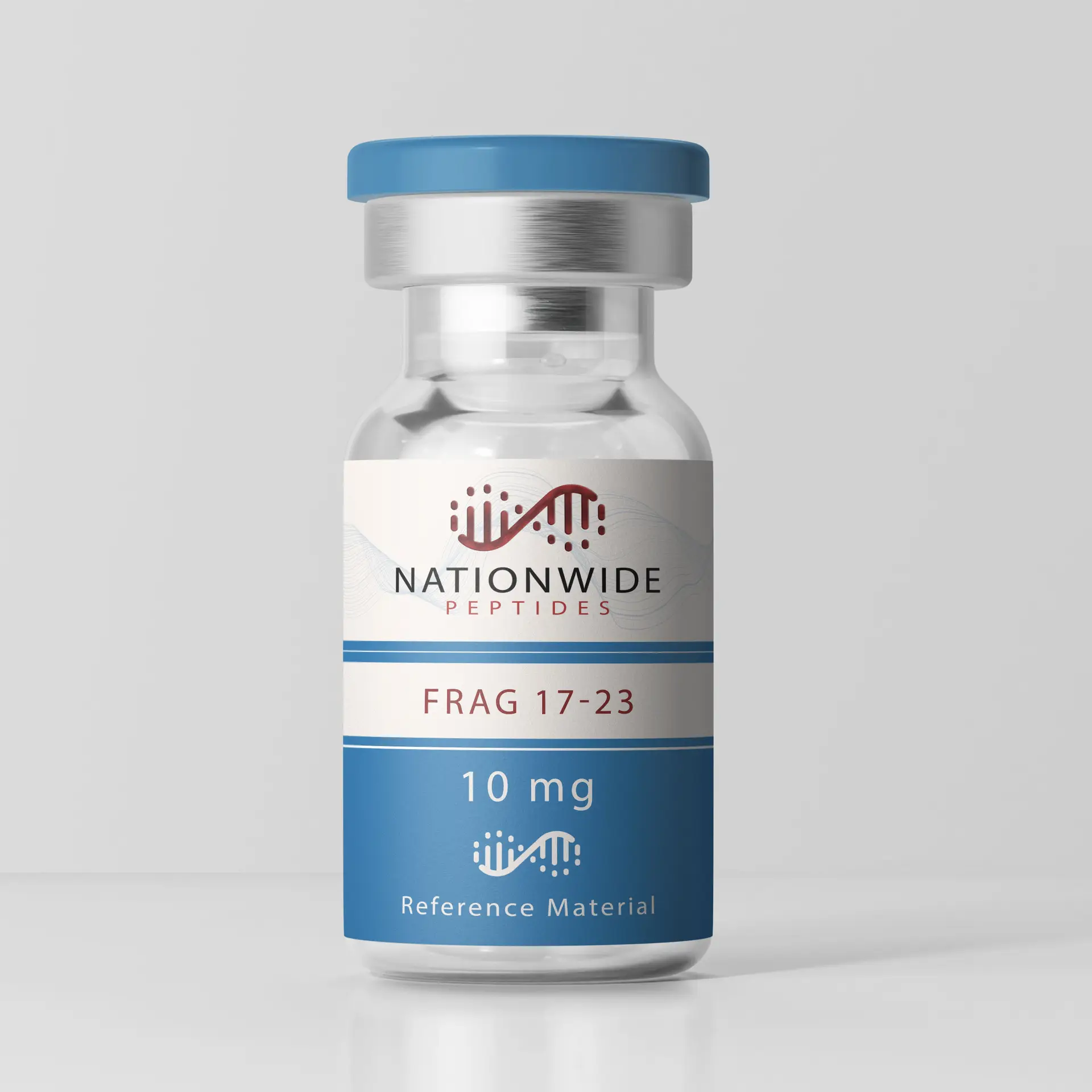
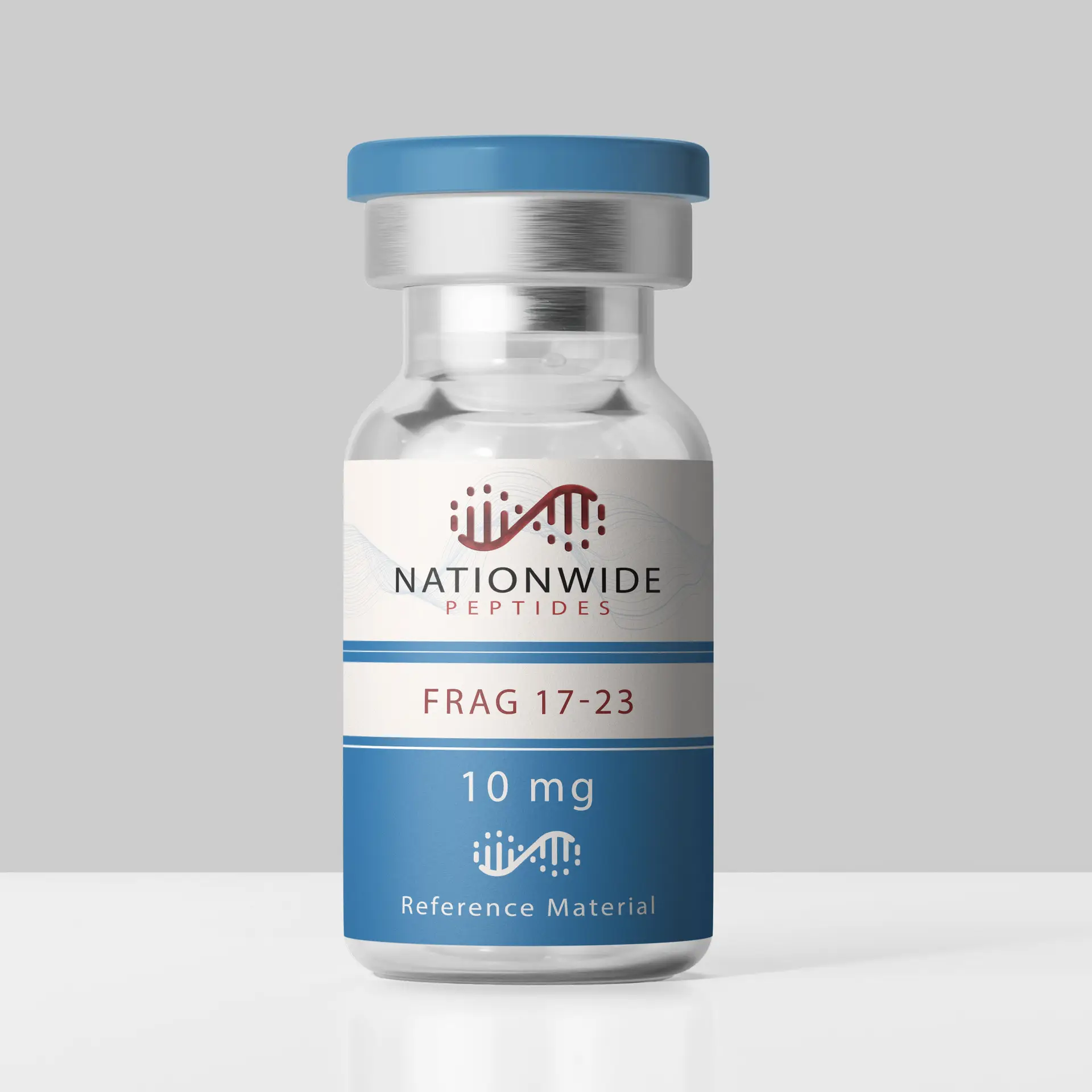

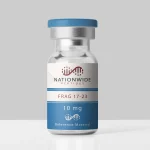
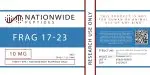

TB-500 Fragment (17-23) is a truncated synthetic peptide corresponding to residues 17-23 of thymosin beta-4, extensively used in pre-clinical research to investigate actin sequestration, wound healing processes, anti-inflammatory responses, and cellular regeneration. This research-grade peptide is produced under stringent GMP-compliant conditions and provided as a lyophilized powder to ensure superior purity, stability, and reliability in experimental applications.
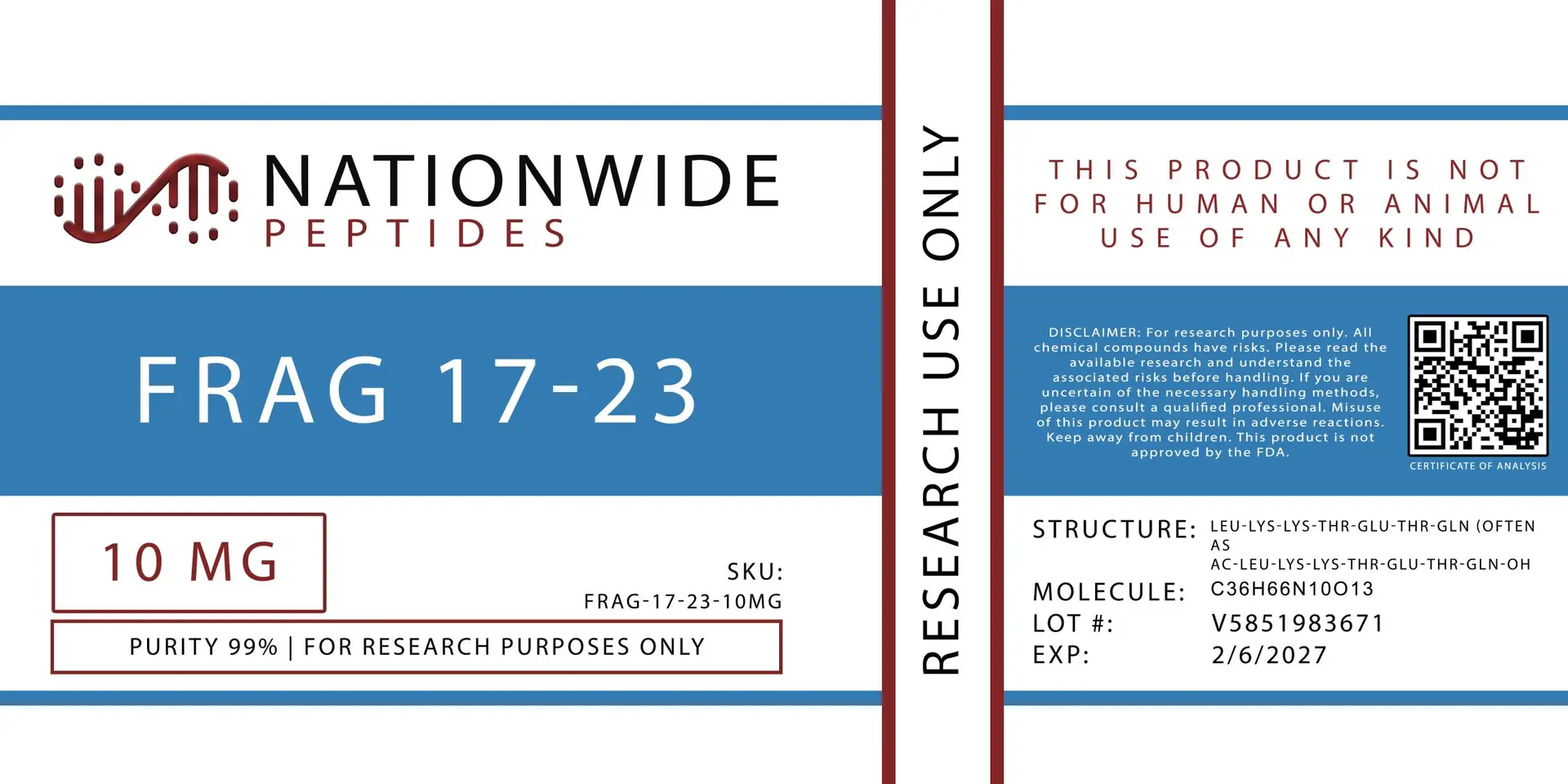
Engineered solely for preclinical investigations, each batch of TB-500 Fragment (17-23) undergoes a comprehensive quality assessment and includes complete documentation, including a Certificate of Analysis (COA), purity data, and structural verification.
Scientific Overview
TB-500 Fragment (17-23) retains the conserved LKKTETQ actin-binding motif of thymosin beta-4 and influences cytoskeletal organization in research settings. Preclinical investigations examine TB-500 Fragment (17-23) in the following areas:
- Modulation of actin polymerization and cytoskeletal reorganization in cell migration models
- Investigation of wound healing and tissue remodeling processes in dermal research systems
- Study of inflammatory response modulation in stress-challenged cellular models
- Examination of angiogenic signaling and vascular repair pathways in vitro
- Analysis of cytoskeletal reorganization mechanisms in musculoskeletal and epithelial research models
Why Researchers Choose Our TB-500 Fragment (17-23)
For laboratories requiring dependable TB-500 Fragment (17-23) research peptide, our manufacturing process prioritizes reproducibility and scientific precision. Every batch is confirmed for:
- Purity ≥99% by HPLC
- Structural identity via mass spectrometry
- Third-party Certificate of Analysis (CoA) available per lot
For Research Use Only. Not for human use.
This product is intended solely for laboratory and research purposes by qualified professionals. It is not approved for human or animal use or consumption.
Explore our testing protocols in About Peptides > Rigorous Testing.
Research-Referenced Functional Attributes (Based on existing preclinical and literature data—not intended as claims of therapeutic use)
- Retention of actin-binding domain to regulate cytoskeletal dynamics and cell motility in in vitro models, as described in foundational actin interaction studies (pubmed.ncbi.nlm.nih.gov)
- Investigation of wound healing mechanisms through modulation of actin polymerization and cellular migration in dermal repair studies
- Examination of inflammatory signaling attenuation in stress-induced cellular systems
- Analysis of regenerative pathways via cytoskeletal reorganization in laboratory models
- Study of angiogenic responses in vascular research models
- Examination of mast cell activation compared to full-length thymosin beta-4 in immune-related assays