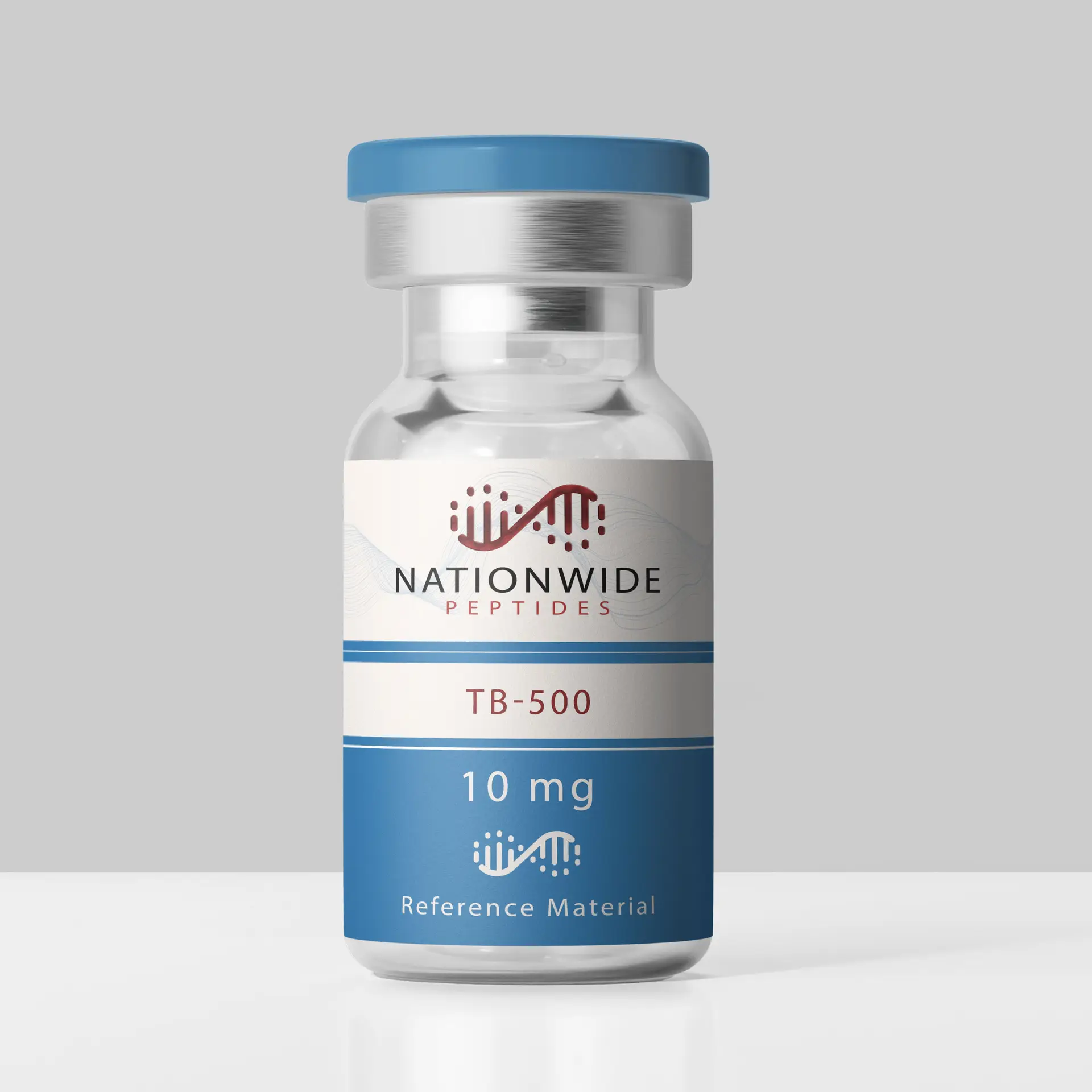
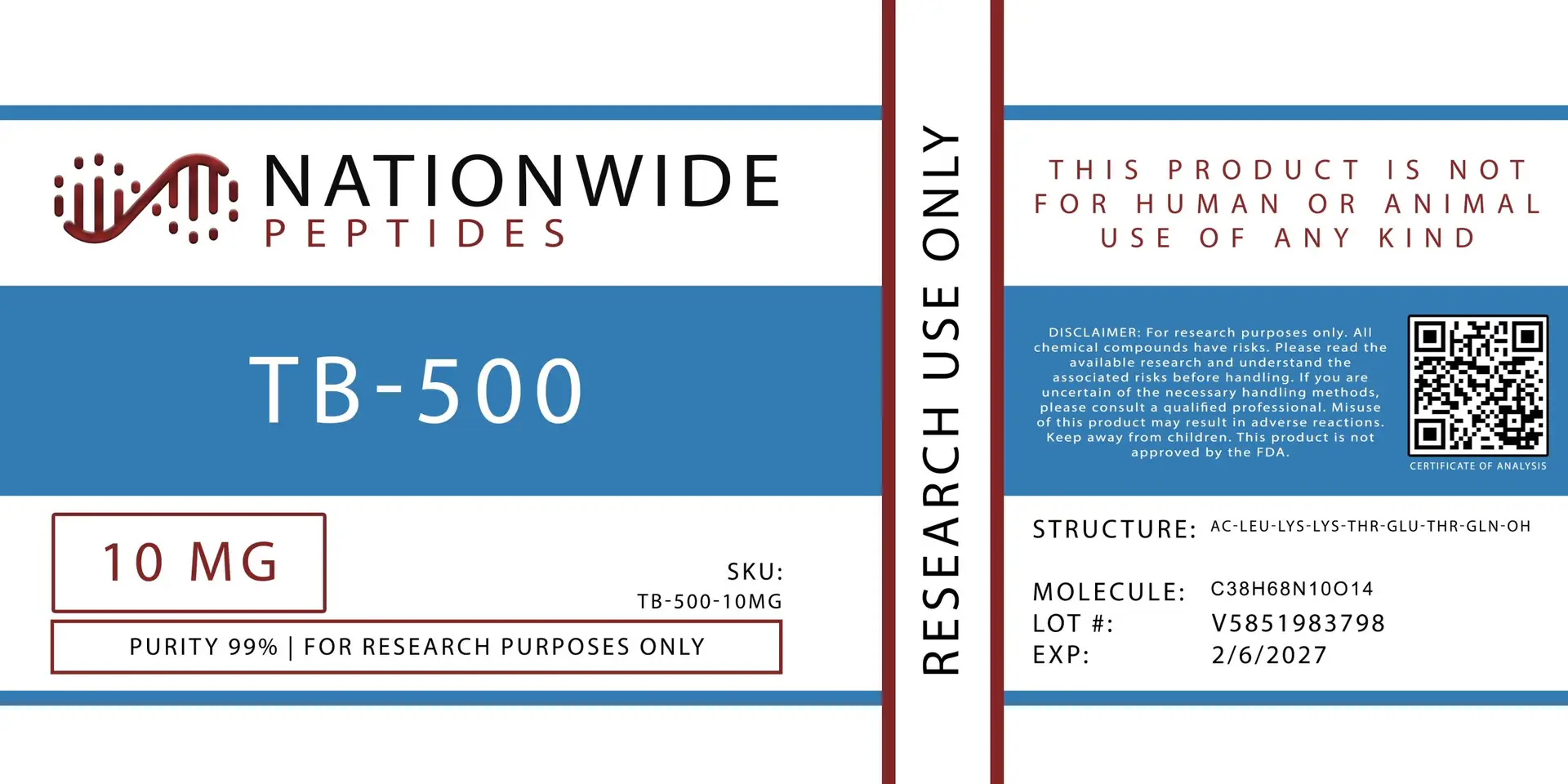
Product Usage: This PRODUCT IS INTENDED AS A RESEARCH CHEMICAL ONLY. This designation allows the use of research chemicals strictly for in vitro testing and laboratory experimentation only. All product information available on this website is for educational purposes only. Bodily introduction of any kind into humans or animals is strictly forbidden by law. This product should only be handled by licensed, qualified professionals. This product is not a drug, food, or cosmetic and may not be misbranded, misused or mislabeled as a drug, food or cosmetic

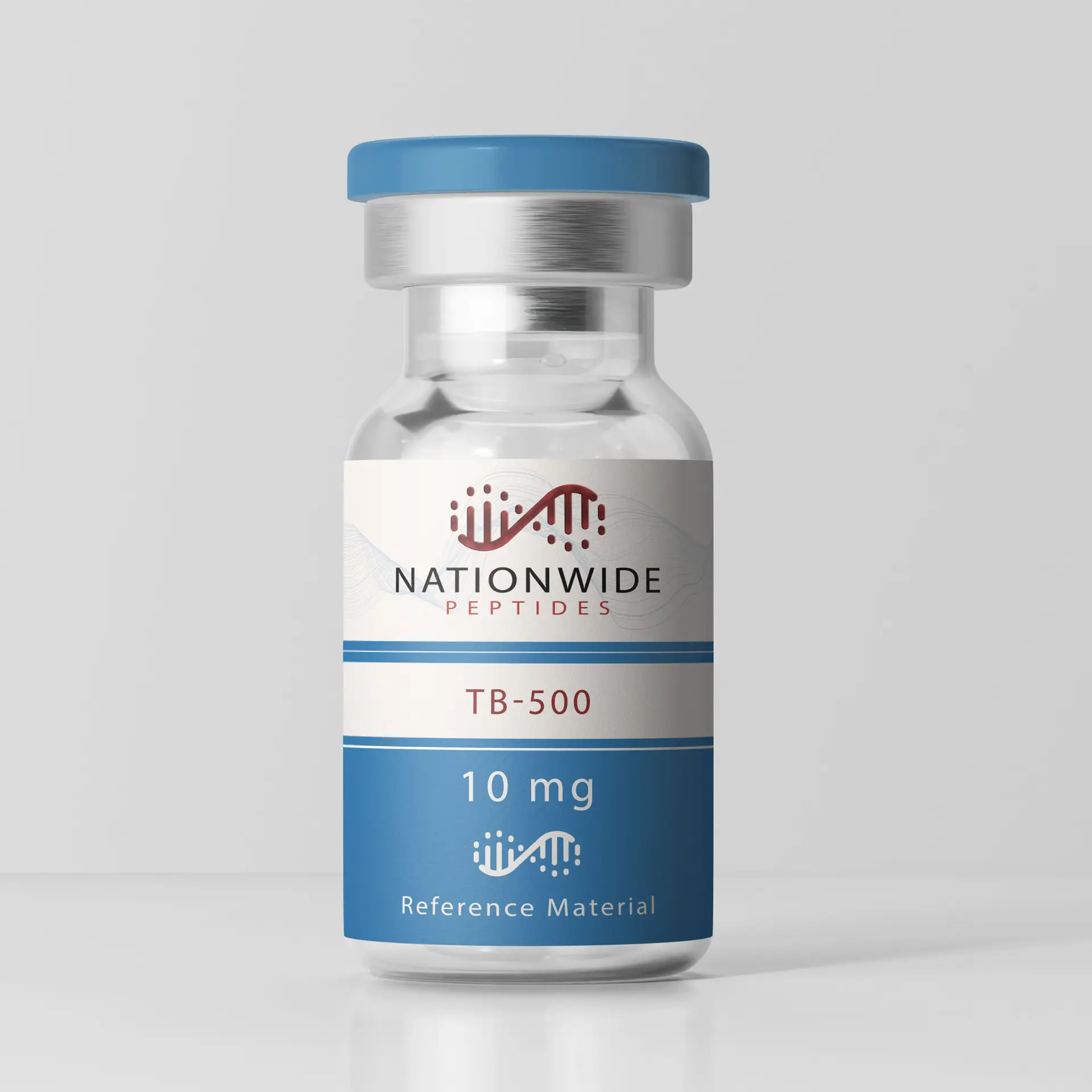
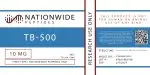
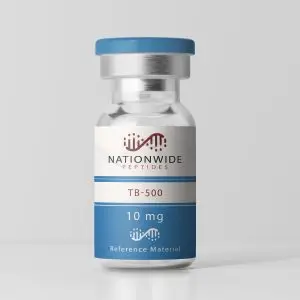
TB-500
TB-500
$110.00 $165.00Price range: $110.00 through $165.00 Select options

TB-500

Price range: $110.00 through $165.00

TB-500 (Thymosin Beta-4 Fragment) is a synthetic research peptide frequently examined in preclinical studies involving cellular migration, tissue-repair pathways, angiogenesis, and cytoskeletal organization.

Free shipping on all orders over $200 (US)

  • 99% Purity – Third-Party Tested
  • Fast & Reliable Shipping
Guaranteed Safe Checkout

TB-500 (Thymosin Beta-4 Fragment) is a synthetic research peptide frequently examined in preclinical studies involving cellular migration, tissue-repair pathways, angiogenesis, and cytoskeletal organization. As a key actin-binding peptide fragment, TB-500 is widely used across regenerative biology, musculoskeletal studies, and wound-healing research models.

Our TB-500 peptide is manufactured under strict analytical standards and supplied as a stable lyophilized powder to ensure experimental consistency, purity, and long-term reliability.

Key Scientific Features

  • High-purity, research-grade TB-500 peptide
  • Lyophilized formulation for enhanced stability during storage
  • Full Certificate of Analysis (COA)verifying purity and identity
  • Stringent quality-controlled manufacturing environment
  • Optimized for regenerative, cellular, and musculoskeletal research applications

Why Researchers Choose Nationwide Peptides

  • Pharmaceutical-grade synthesis protocols
  • Analytical validation for purity, identity, and structural integrity
  • Reproducible batch-to-batch consistency
  • Transparent documentation and traceability
  • Competitive research-market pricing
  • Ideal for academic labs, biotechnology research groups, and peptide-science environments requiring high-stability, high-performance TB-500 peptide.
Research-Referenced Applications – (Based on existing scientific literature; not intended as therapeutic claims.) TB-500 is commonly explored in preclinical models involving:

  • Cellular migration & cytoskeletal reorganization pathways
  • Muscle, tendon, and ligament recovery research
  • Regenerative-tissue and wound-healing studies
  • Angiogenesis and microvascular remodeling
  • Inflammatory and oxidative-stress response signaling
  • Actin-regulation and cell-mobility mechanisms

Its involvement in actin polymerization and cellular motility makes TB-500 a key peptide of interest in regenerative and molecular-biology research.


Storage & Handling

  • Store at –4°F for long-term preservation
  • Store in a tightly sealed container and protect from light, moisture, air exposure, and elevated temperatures.
  • Reconstitute only according to institutional laboratory protocols.
  • Use standard PPE and laboratory safety procedures during handling

Peptide Research

  • PubMed: Goldstein et al. (2012) multi-functional review [PMID: 22074294]; Malinda et al. (1999) wound healing [PMID: 10469335]; Sosne et al. (2012) dermal repair [PMID: 23050815]; Philp et al. (2004) angiogenesis/hair [PMID: 15037013]; Crockford et al. (2010) Phase I safety [PMID: 20536472]
    https://pubmed.ncbi.nlm.nih.gov/22074294/
  • PubMed: Thevis et al. (2012) TB-500 synthesis/doping [PMID: 22962027]; Wang et al. (2021) Phase I Tβ4 safety [PMID: 34374499]; Malinda et al. (1999) wound healing [PMID: 10469335]; Goldstein et al. (2012) multi-functional review [PMID: 22074294]; Ho et al. (2012) equine doping [PMID: 23084823].
    https://pubmed.ncbi.nlm.nih.gov/22962027/
  • Reviews/Recent: Ueki (2021) anti-aging peptides [PMC: PMC8228050]; Maar et al. (2025) cardiac remodeling [PMID: 38712345]; Ti et al. (2015) diabetic angiogenesis [PMID: 26177688]; WADA (2023) metabolism report
    https://pmc.ncbi.nlm.nih.gov/articles/PMC8228050/
  • Additional: Peptides.org (2025) safety overview; Innerbody (2025) TB4/TB-500 guide; ScienceDirect (2024) metabolism/wound healing [DOI: 10.1016/j.jchromb.2024.123941].
    https://www.sciencedirect.com/science/article/pii/S1570023224000412