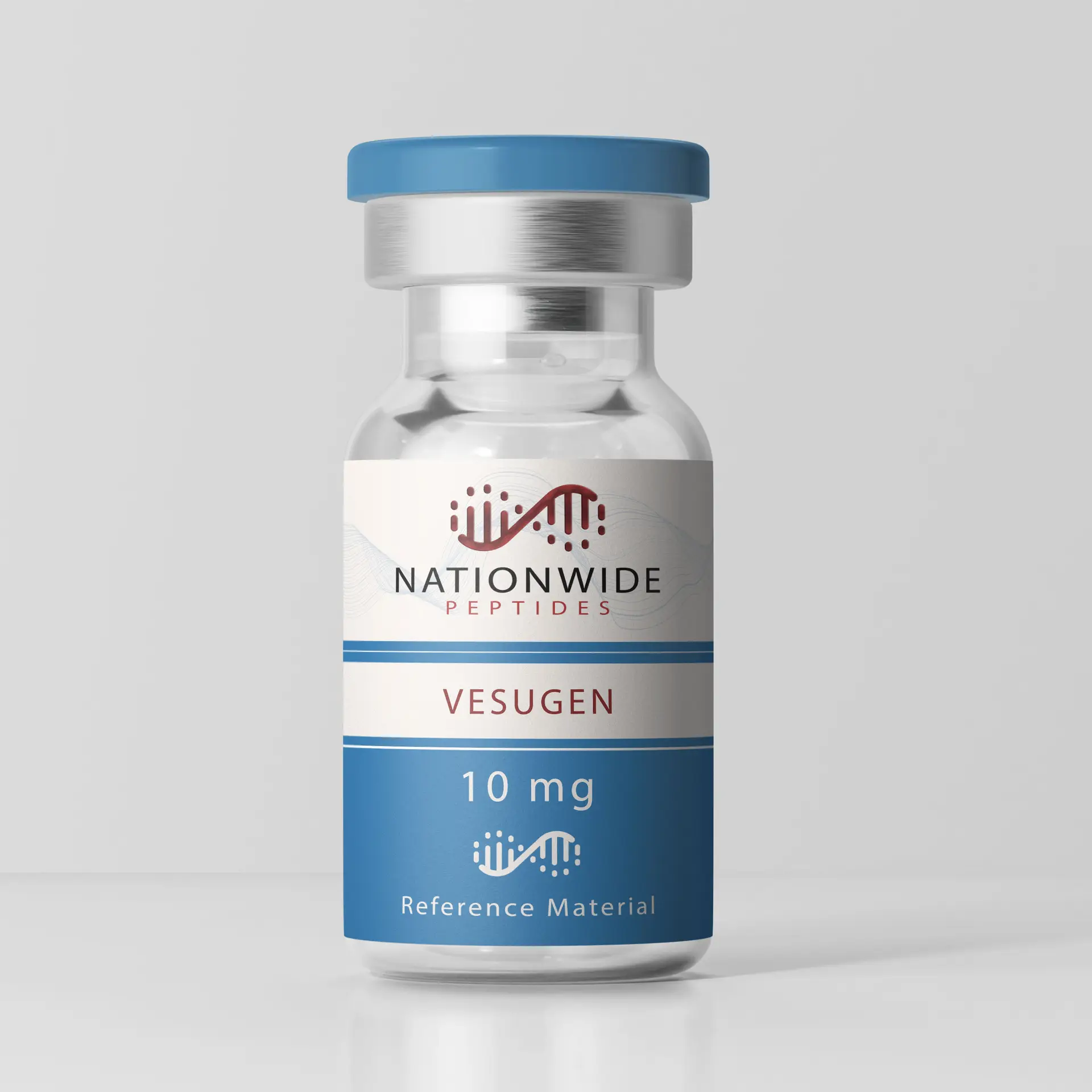
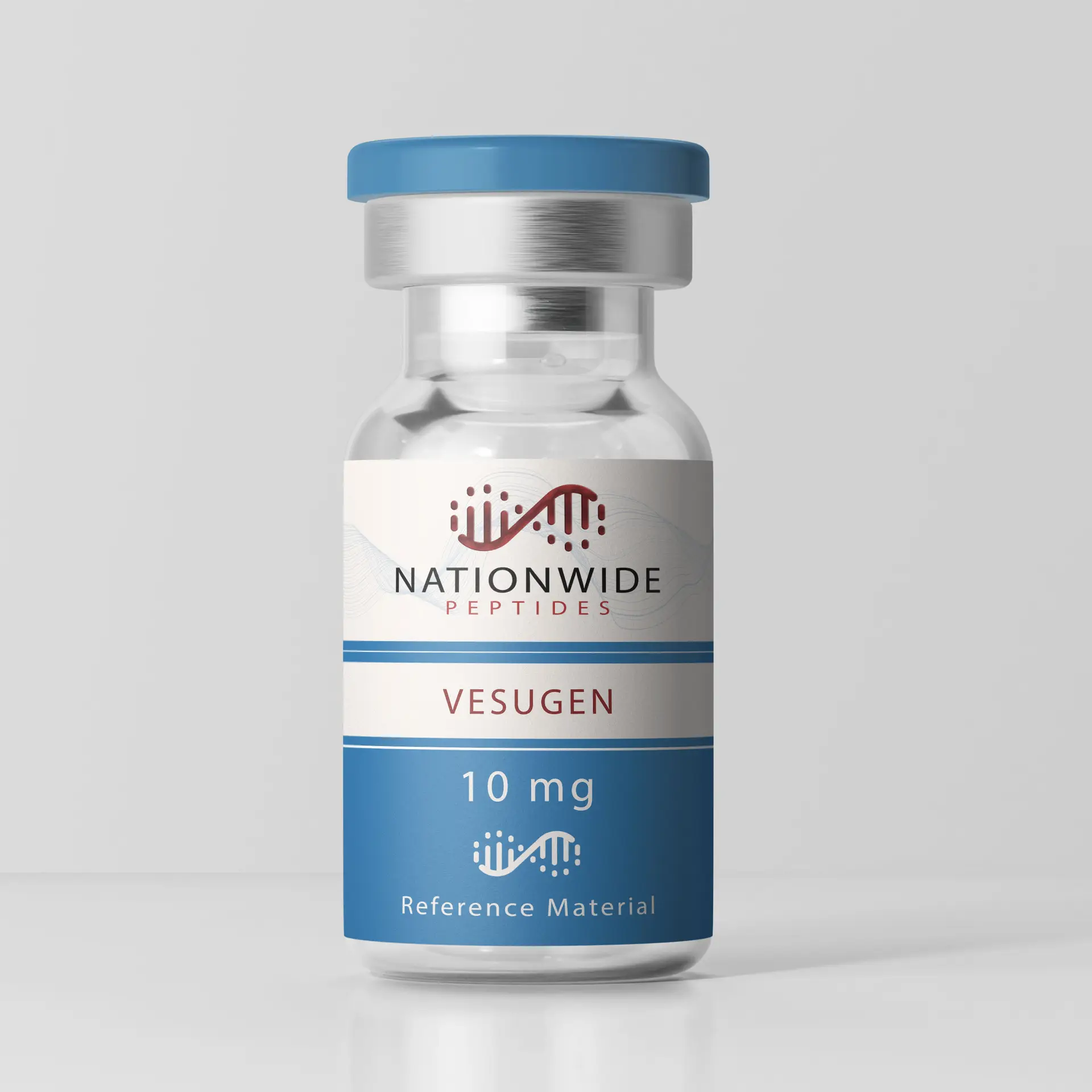
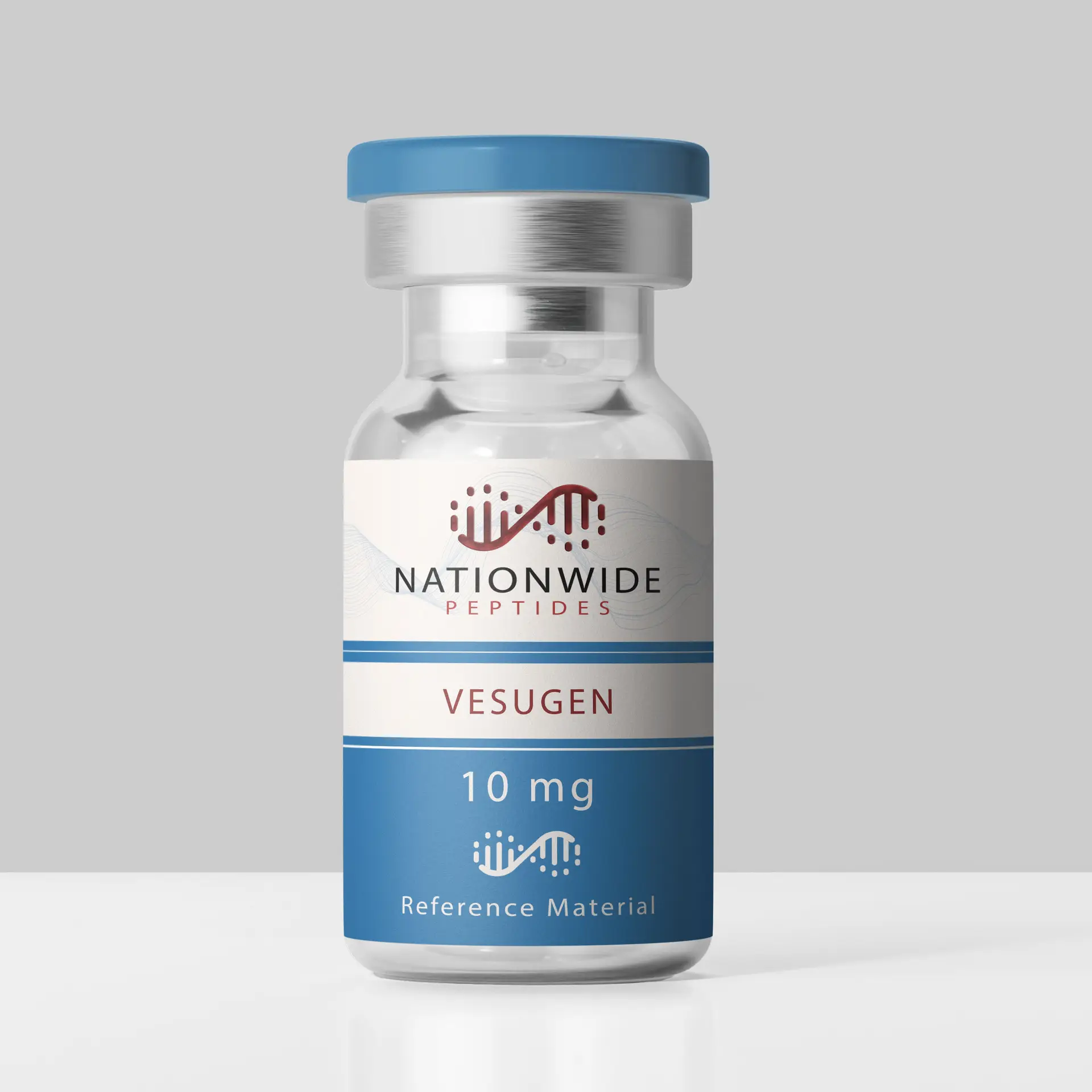







Vesugen is a synthetic tripeptide bioregulator extensively used in pre-clinical research to investigate vascular tissue regulation, endothelial cell proliferation pathways, and microcirculatory dynamics. This research-grade peptide is produced under stringent GMP-compliant conditions and provided as a lyophilized powder to ensure superior purity, stability, and reliability in experimental applications. For Research Use Only. Not for human use.
Engineered solely for preclinical investigations, each batch of Vesugen undergoes a comprehensive quality assessment and includes complete documentation, including a Certificate of Analysis (COA), purity data, and structural verification.
Scientific Overview:
Vesugen is a short peptide bioregulator that influences vascular-associated gene expression and cellular processes in research settings. Preclinical investigations demonstrate Vesugen’s potential effects in the following areas:
- Endothelial cell proliferation and vascular wall integrity in laboratory models
- Microcirculatory network density and perfusion dynamics in preclinical models
- Epigenetic regulation of proliferation markers in in vitro models
- Vasoprotective mechanisms studied in preclinical hypertensive and atherosclerotic models
Why Researchers Choose Our Vesugen
For laboratories requiring dependable Vesugen research peptide, our manufacturing process prioritizes reproducibility and scientific precision. Every batch is confirmed for:
- Purity and structural identity
- Consistent performance in laboratory research applications
- Rigorous production controls and full documentation
- Accessible pricing within the research community
Research-Referenced Functional Attributes (Based on existing preclinical and literature data — not intended as claims of therapeutic use)
- Stimulation of Ki-67 expression and endothelial proliferation in aging cell cultures
- Enhancement of microvascular network density in preclinical hypertensive rat models
- Modulation of gene promoter regions via epigenetic interactions in laboratory settings
- Support for investigations into microcirculation and perfusion in brain cortex models
- Potential role in vasoprotective signaling and endothelial homeostasis as observed in preclinical studies